
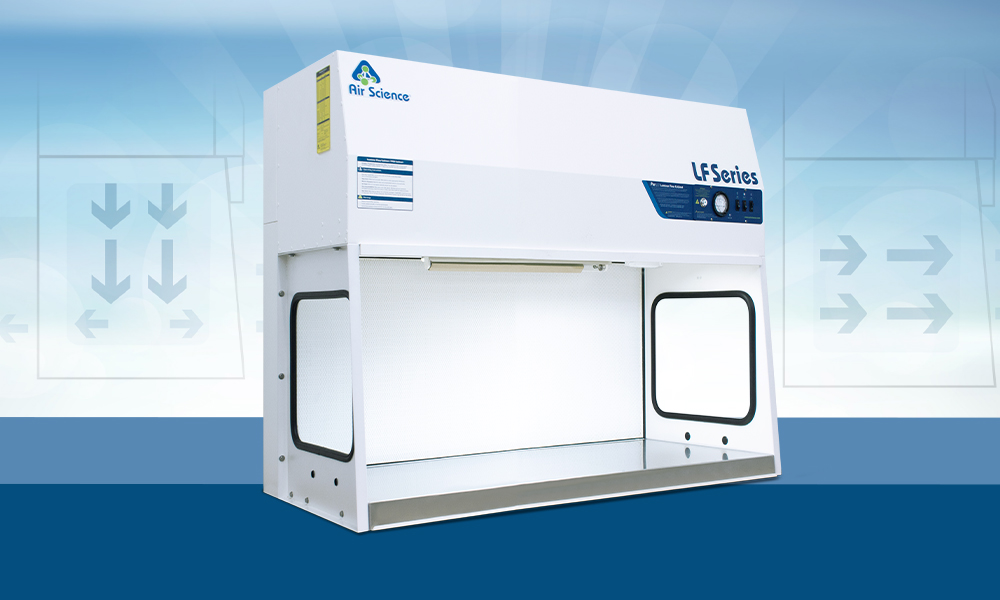
In the pharmaceutical and compounding industries, the safety and integrity of final drug products are non-negotiable. To ensure drug efficacy and patient safety, regulatory bodies like the U.S. Food and Drug Administration (FDA) enforce rigorous Current Good Manufacturing Practices (cGMP). At the heart of maintaining these standards is meticulous contamination control, a task where the laminar flow cabinet, or laminar flow hood, is indispensable.
For laboratories working with sensitive non-hazardous materials, the laminar flow cabinet is the primary defense against particulate contamination. Choosing the right unit is not just a matter of convenience; it is a critical step toward achieving regulatory compliance.
The Regulatory Mandate: Achieving ISO Class 5 and cGMP Grade A
For manufacturers of sterile drugs, such as injectables, IV admixtures, and ophthalmic solutions, environmental cleanliness is the ultimate quality benchmark. cGMP standards demand that all high-risk, aseptic operations take place within an aseptic environment.
Laminar flow cabinets are essential because they are engineered to meet the highest regulatory classification for critical work zones:
- ISO Class 5: This international standard requires that the air inside the work zone must not exceed 3,520 particles of 0.5 µm or larger per cubic meter. This level of purity is often referred to as a Grade A environment in European and certain FDA guidelines for sterile manufacturing.
- Aseptic Processing: The FDA’s guidance, alongside standards like USP <797> for sterile compounding, mandates that aseptic manipulations (like filling, mixing, and preparing sterile products) occur in a Grade A environment, which is typically supplied by an LFC.
Without the unidirectional, filtered airflow provided by an LFC, sensitive components and in-process materials are left vulnerable to airborne particulates, pyrogens, and microorganisms, leading directly to a failure in drug quality and compliance.
The Technology of Purity: Unidirectional Airflow
Laminar flow cabinets operate on a simple but highly effective principle: using non-turbulent, continuous airflow to constantly flush the work zone, preventing the accumulation of airborne contaminants.
- HEPA Filtration: Room air is drawn into the cabinet and forced through a High-Efficiency Particulate Air (HEPA) filter, which is typically 99.97% efficient at capturing particles down to 0.3 microns. Air Science utilizes advanced filtration technology, including our proprietary Multiplex™ HEPA Filtration, to ensure superior particle retention.
- Unidirectional Flow: The filtered air moves in a uniform, single direction, known as laminar flow, at a consistent velocity (typically 60–100 feet per minute depending on series and configuration). This “sheet” of clean air isolates the work area from the surrounding room air.
Choosing Your Flow Pattern
Air Science offers both Horizontal and Vertical configurations, allowing facilities to match the laminar flow cabinet design to their specific workflow and space constraints:
| Cabinet Type | Airflow Direction | Key Benefit for Application |
| Vertical Laminar Flow | Downward (from top to work surface) | Accommodates larger equipment with minimal disruption; more compact benchtop options. |
| Horizontal Laminar Flow | Across (from back wall to user) | Less turbulence caused by air impinging on the work surface; provides a clean “curtain” of air exiting the work zone (like the Air Science Purair LF Series Horizontal Laminar Flow Cabinets). |
Air Science: Engineering Confidence and GMP Compliance
For pharmaceutical and quality control laboratories, long-term compliance and operational efficiency depend on the cabinet’s design and reliability. Air Science’s laminar flow cabinets are built with features that simplify validation and ensure continuous cGMP adherence:
- Exceeding ISO Class 5: Our units are designed to maintain particle counts well within the Grade A/ISO 5 limits, offering an additional margin of safety and consistency.
- Multiplex™ Filtration Technology: This exclusive system ensures optimal performance and easy, tool-free filter replacement, minimizing the risk of contamination during maintenance.
- Energy Efficiency and Low Vibration: Utilizing an external rotor blower in the Purair LF Series reduces noise and vibration, which is crucial for sensitive procedures and helps maintain stable laminar airflow.
- Durable, Cleanable Construction: Cabinet frames and work surfaces are designed to simplify decontamination protocols required by cGMP.
- Design for Compliance: Features like the unique anti-bypass filter clamping mechanism ensure a leak-proof seal at the filter’s edge, preventing unfiltered air from entering the work zone, a critical requirement for passing regulatory inspection and certification.
A reliable Laminar Flow Cabinet is an investment in product quality, regulatory compliance, and peace of mind. By providing an expertly controlled ISO Class 5 environment, Air Science ensures your critical processes are shielded from the dangers of contamination, allowing you to meet the stringent safety and quality standards of the FDA and cGMP.
Learn more about the Air Science Purair LF series and find the right configuration for your sterile application.