Ductless Demonstration Fume Hoods Improve Classroom Experience
Hands-on learning sparks curiosity in students and gets them interested in learning, whether in high
Air Science ductless fume hoods provide advanced chemical containment for laboratories where hazardous vapors, fumes, and volatile organic compounds (VOCs) must be safely controlled. Contaminated air is drawn away from the operator, passed through application-specific activated carbon filtration and, in selected configurations, HEPA or ULPA filtration, then returned to the laboratory.
Ductless fume hood suitability is application-specific. Chemical type, concentration, quantity, evaporation rate, frequency and duration of use, filter media, and operating conditions should be evaluated before selecting a ductless fume hood and filter configuration.
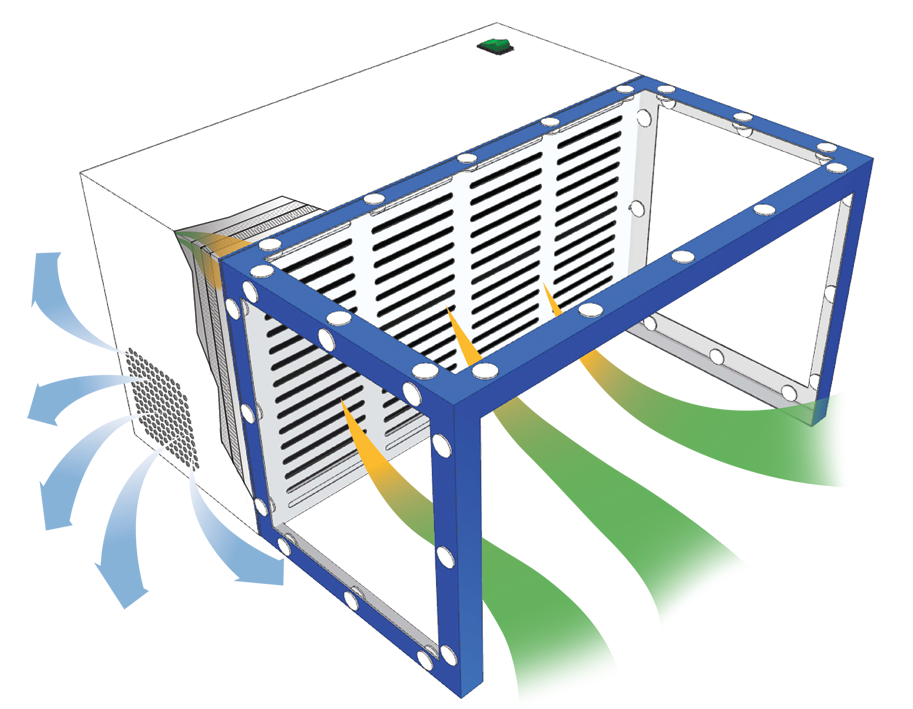
Room air is drawn into the hood opening, creating inward airflow intended to contain contaminants generated inside the enclosure. The contaminated air then passes through the selected filtration system. Activated carbon adsorbs compatible chemical vapors; HEPA or ULPA filtration may be used where particulate filtration is required. Filtered air is then recirculated back into the laboratory.
A ductless fume hood can be a good choice for applications involving known chemicals that can be effectively captured by the selected filter media.
Ductless fume hoods can be appropriate for processes that generate relatively controlled quantities of hazardous vapors.
A ductless system can be a good option for laboratories where installing external ductwork is difficult or expensive.
Ductless fume hoods can provide greater flexibility for facilities that may need to relocate equipment. Because filtered air is recirculated back into the laboratory rather than exhausted outdoors, they can also reduce the loss of conditioned laboratory air.
A ducted fume hood may be more appropriate for applications involving high chemical volumes.
Ducted systems may be more appropriate for processes involving unknown or frequently changing chemical mixtures.
A ducted fume hood should be considered for processes that cannot be adequately controlled by available filter media.
A ducted solution may be appropriate when direct exhaust to the outdoors is required by the facility’s risk assessment, applicable standards, codes or procedures.
|
|
|
|
|
|
|
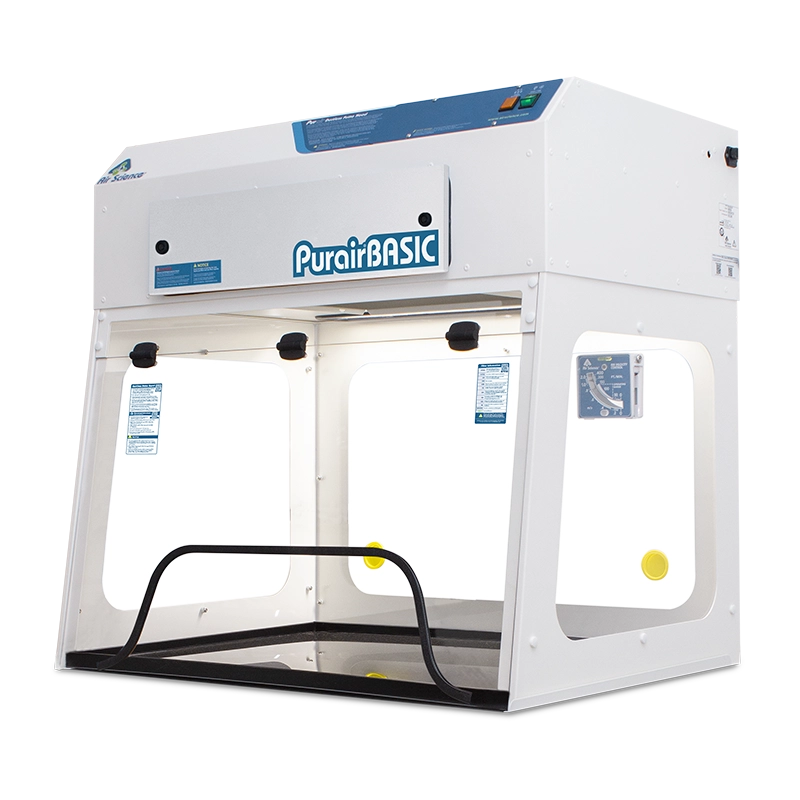
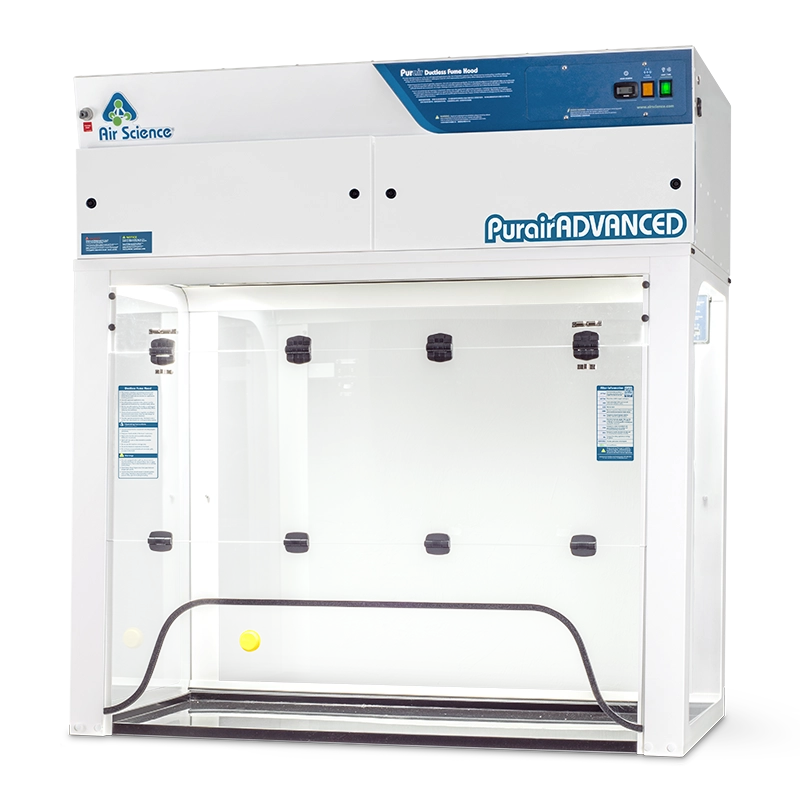
| Ductless Fume Hoods | Purair FUMEBOX | Purair Basic | Purair Advanced |
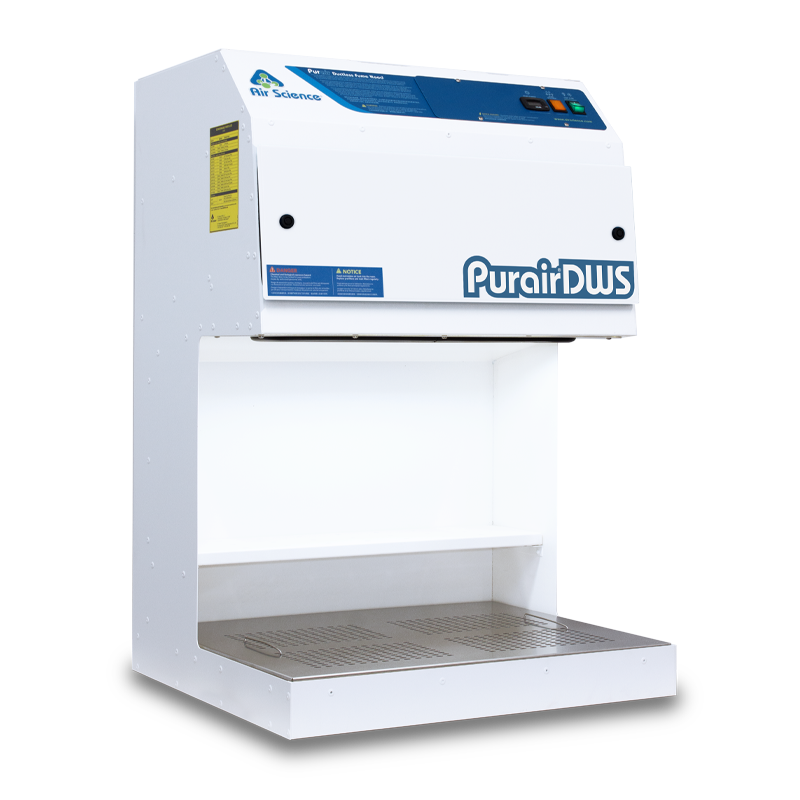
Downflow Workstations |
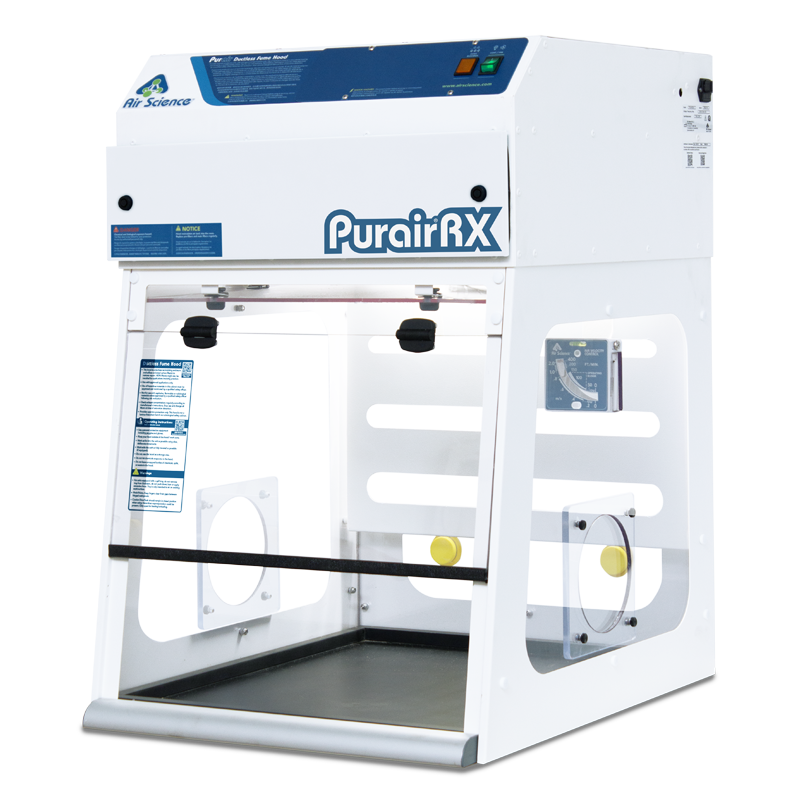
EDU Series with Mobile Base |
| Available External Width | 20.72 - 29.75" | 24 - 48" | 29.5 - 96" | 24 - 48" | 24 - 59.5" |
| Available External Height | 15.67 - 21.16" | 35" | 53" | 31.5" | 78 - 87" |
| Available External Depth | 12.02 - 24.72" | 24 - 27" | 27.375" | 22.75" | 27 - 28.5" |
| Available Internal Height | 11 - 20.63" | 23.6" | 38" | 15.75" | 24 - 38" |
| Description | Fume Adsorber | Compact, Value | Premium, High Performance | Unique Downward Airflow | Educational, Demonstration |
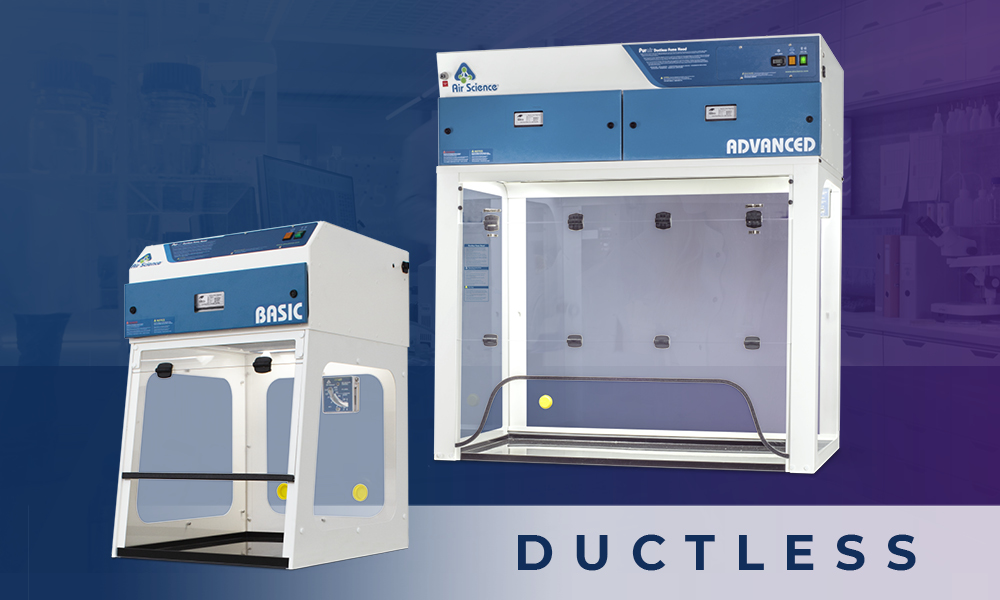
Compact, value-focused ductless fume hoods ideal for controlled laboratory applications where space is limited or smaller volumes are handled.
Premium, high-performance ductless fume hoods available in multiple sizes and configurations for a wide range of laboratory applications.
Compact ductless fume hood designed for localized containment and fume adsorption in applications where workspace is limited.
Downflow workstation designed for applications that benefit from downward airflow and an open, accessible work area.
Class I ductless balance enclosure designed for non-sterile compounding procedures and applications requiring USP 800 compliance.
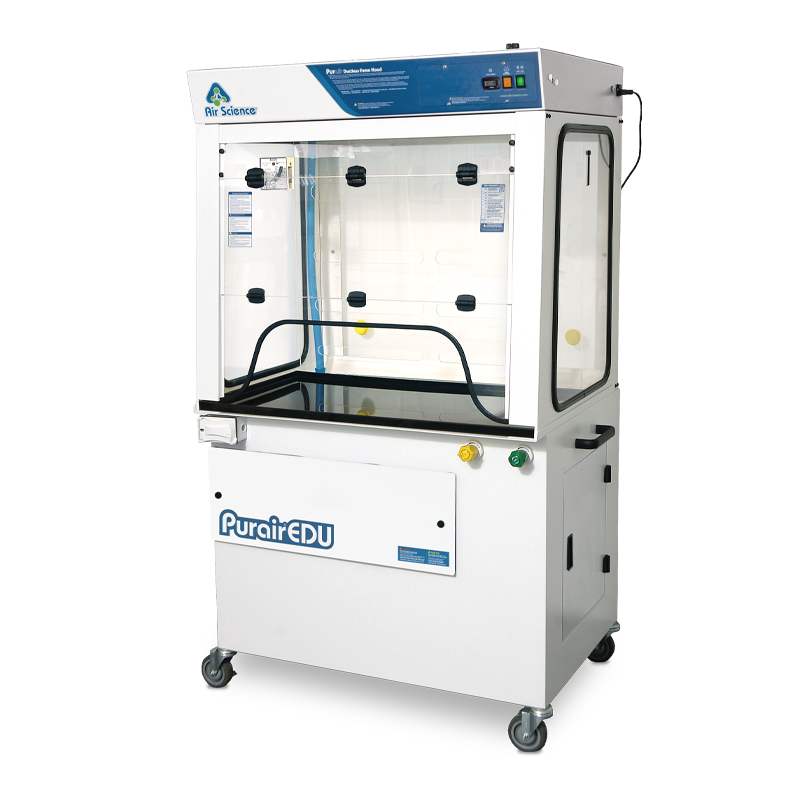
Mobile ductless fume hoods designed for educational and demonstration applications where flexibility and portability are important.
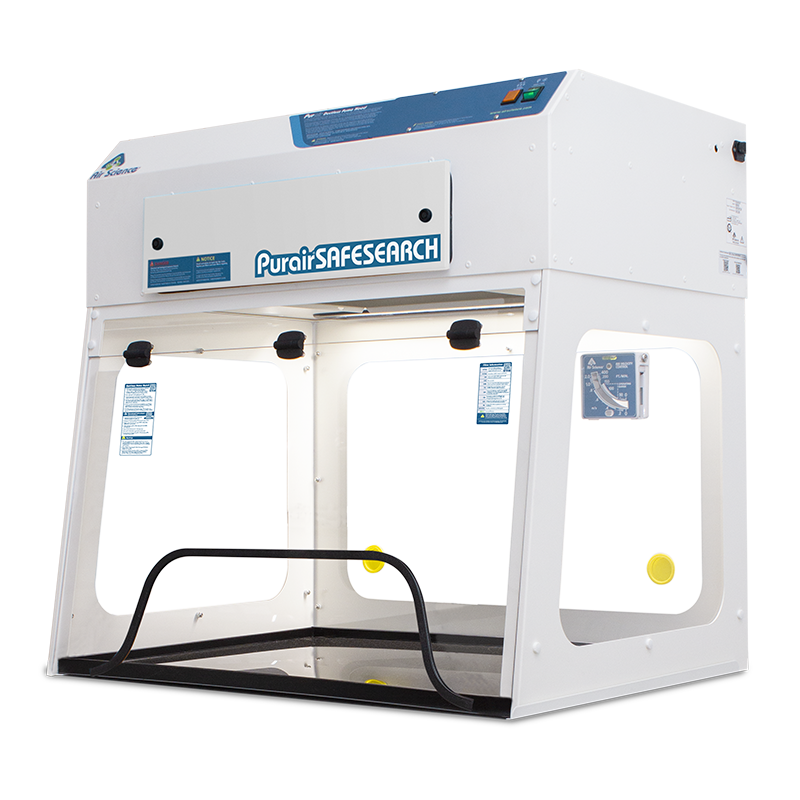
Designed for government and high-security mail screening, Purair® SafeSEARCH ductless fume hoods provide containment for applications involving the examination and processing of potentially hazardous or suspicious mail.
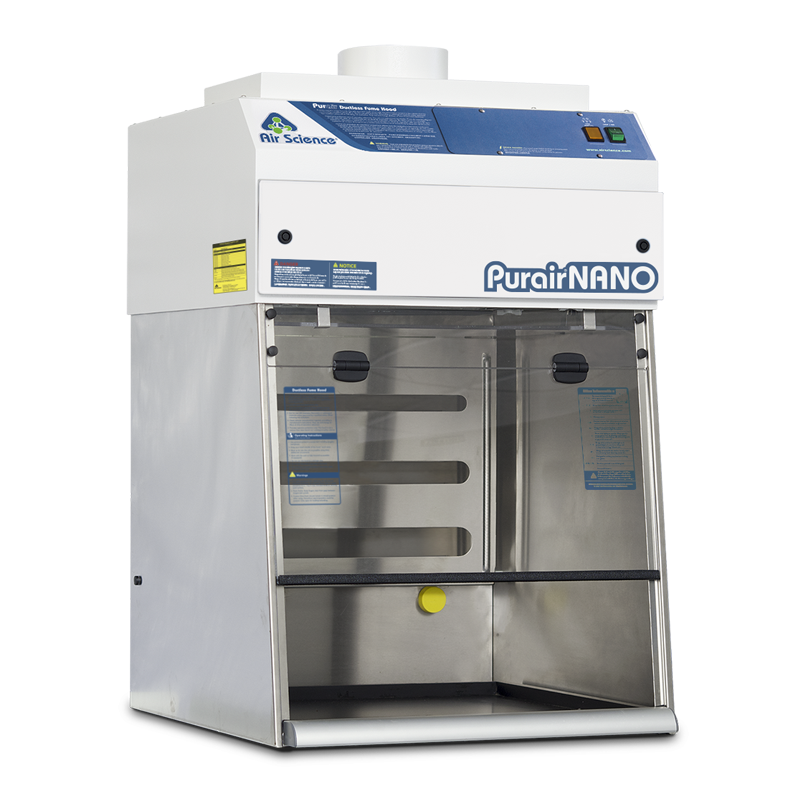
Purair® NANO enclosures provide operator protection from nanomaterial particles less than 100 nm in size during applications such as carbon nanotube and lithium battery research and processing.
Designed for animal research laboratories, Purair® CAGEX provides containment to help protect laboratory personnel and the surrounding environment during animal research applications.
Custom laboratory enclosures are designed around specific customer applications and equipment requirements to provide appropriate containment while maximizing operator safety and accessibility.
Purair® Microscope Enclosures provide personnel and process protection during microscopy procedures involving hazardous materials or applications where a contamination-free environment is important.
Purair® ROTOVAP enclosures provide containment for rotary evaporation applications where volatile solvents are removed from samples under vacuum, helping control potentially hazardous vapors generated during the process.

Hands-on learning sparks curiosity in students and gets them interested in learning, whether in high

Regular carbon filter replacement and ductless fume hood maintenance are important steps to ensure operator
Since our start in 2002, we have sought to provide the highest level of design,
Fume hoods are used in a variety of applications to limit exposure to hazardous fumes
Below are answers to our frequently asked questions and links to additional helpful information.
A ductless fume hood is a laboratory containment enclosure that draws air away from the operator and passes contaminated air through filters rather than exhausting it through building ductwork. The correct filter configuration depends on the chemicals or particulates used in the application.
Ductless fume hoods can provide effective containment when the hood, airflow, filtration, and application are properly matched. They are not appropriate for every chemical or process. A chemical compatibility and application review should be completed before selecting a ductless system.
Suitability depends on the chemical, concentration, quantity, evaporation rate, frequency of use, and selected filter media. Air Science uses application-specific activated carbon media for different chemical families. Chemical compatibility should be evaluated before use rather than assuming that one carbon filter is suitable for every chemical.
Suitability is determined by evaluating the chemicals used, concentrations, quantities, evaporation rates, frequency and duration of use, and available filtration media. Air Science offers an application review process to help determine whether a ductless fume hood and specific filter configuration are appropriate for the intended application.
There is no universal list that applies to every ductless hood and filter configuration. Chemicals that cannot be effectively adsorbed by the available filter media, applications with excessive vapor generation, unknown mixtures, or conditions outside the manufacturer’s evaluated use parameters may require a ducted solution. Air Science recommends an application review for chemical processes.
No. Their defining feature is that contaminated air is filtered within the unit and recirculated rather than connected to an external building exhaust system. This can simplify installation and allow greater flexibility in hood placement.
A ducted fume hood moves contaminated air through building ductwork and exhausts it outdoors. A ductless hood filters the contaminated air and returns it to the laboratory. Ductless systems can reduce ductwork and HVAC requirements, while ducted systems may be preferable for high-volume, unknown, or unsuitable chemical applications.
The filter must be selected for the chemical family and application. Factors include chemical identity, concentration, volume, evaporation rate, and frequency of use.
Filter life varies with chemical loading, usage, environmental conditions, and filter capacity. A routine replacement schedule should be combined with the monitoring, testing, and maintenance procedures appropriate to the application.
Carbon filter life is not determined by time alone. Chemical loading, concentration, frequency of use, environmental conditions, and filter capacity can all affect service life. Follow the recommended filter monitoring, testing, and replacement procedures for your specific application.
Breakthrough or saturation depends on the contaminant and filter loading. A safe filter-management program should use the monitoring, testing, and replacement procedures appropriate to the hood and application rather than relying only on odor.
Selected Air Science ductless systems can incorporate HEPA or ULPA filtration for particulate hazards. Activated carbon and particulate filters perform different functions: carbon is used for compatible chemical vapors, while HEPA or ULPA media are used for particles.
Yes, in configurations designed for combined filtration. This can be useful when an application generates both compatible chemical vapors and particulates. The filter arrangement must be selected for the specific process.
Replacement activated carbon filters and other consumables for Air Science ductless fume hoods can be purchased online through Air Science’s filtration store.
No. A chemical fume hood and a biological safety cabinet are designed for different hazards and containment objectives. Applications involving infectious or potentially infectious biological agents should use the appropriate biological safety cabinet rather than assuming a ductless chemical fume hood is equivalent.
Because ductless systems do not require a connection to building exhaust ductwork, many configurations are easier to relocate than conventional ducted hoods. Electrical, clearance, airflow, and application requirements still need to be maintained at the new location.
They can reduce the amount of conditioned laboratory air exhausted outdoors. A conventional ducted hood can place a significant load on a building’s HVAC system because exhausted air must be replaced and conditioned. Actual savings depend on the facility, hood use, and HVAC design.
Operating cost includes electricity, replacement filters, testing, and routine maintenance. A meaningful comparison with a ducted hood should also consider duct installation, exhaust fans, make-up air, and the energy required to condition replacement air.
Required or recommended face velocity depends on the hood design, manufacturer specifications, application, and applicable laboratory safety requirements. Users should follow the operating range specified for the particular Air Science model rather than applying a single value to every enclosure.
Many solvent applications can be candidates for ductless containment when the solvent and expected vapor loading are compatible with the selected activated carbon media. The specific solvent, quantity, concentration, evaporation rate, and use pattern should be reviewed before selection.
Some acid applications can be handled using filter media formulated for compatible acid vapors, but suitability is chemical- and application-specific. The acid, concentration, quantity, and expected vapor generation should be evaluated before specifying a ductless system.
Formaldehyde requires filter media selected specifically for that contaminant and an application review based on concentration and loading. A general-purpose carbon filter should not automatically be assumed suitable.
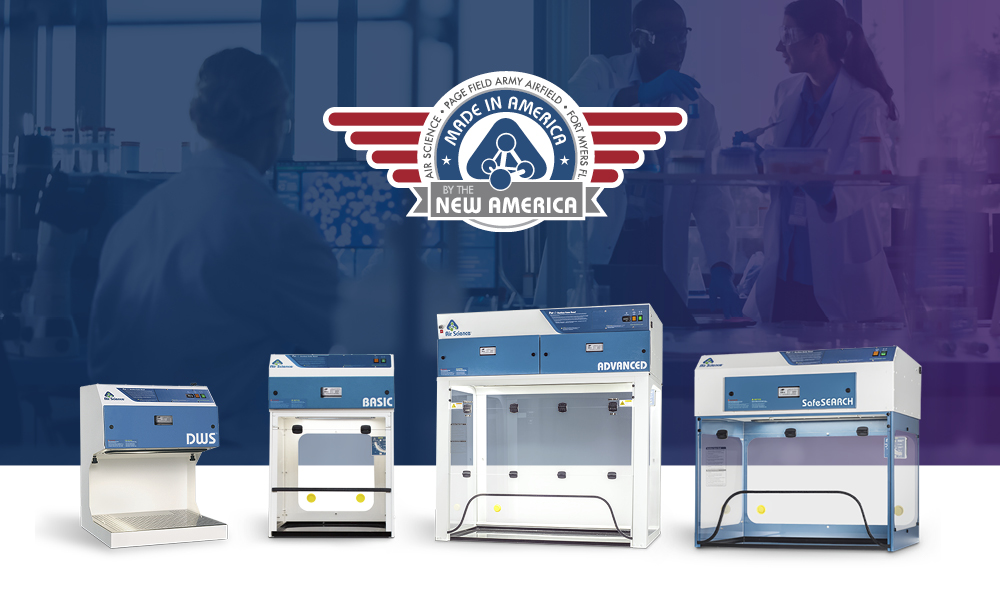
The best ductless fume hood depends on the chemicals or particulates being handled, process volume, equipment size, required work area, and filtration requirements. Air Science offers several ductless configurations, including Purair FUMEBOX, Purair BASIC, Purair ADVANCED, Purair DWS, and EDU systems. An application review can help identify the appropriate model and filter configuration.
The majority of Air Science ductless fume hoods do not come with a filter installed because the appropriate activated carbon filter depends on the specific application and chemicals being used.
Standard Air Science ductless fume hoods can be purchased online. For applications requiring customization or assistance selecting a configuration, submit a quote request to Air Science.
Air Science can review your application, chemicals, concentrations, quantities, and process requirements to help determine an appropriate ductless fume hood and filtration configuration.
Check if your chemicals are suitable for ductless filtration.
Work directly with our team to configure the right solution for your application and safety requirements.
Shop select Air Science products and accessories online.
Order replacement carbon, HEPA, and ULPA filters for Air Science and other major ductless hood brands.