Personnel Protection for Engineered Nanoparticles, Fine Powders & Aerosols
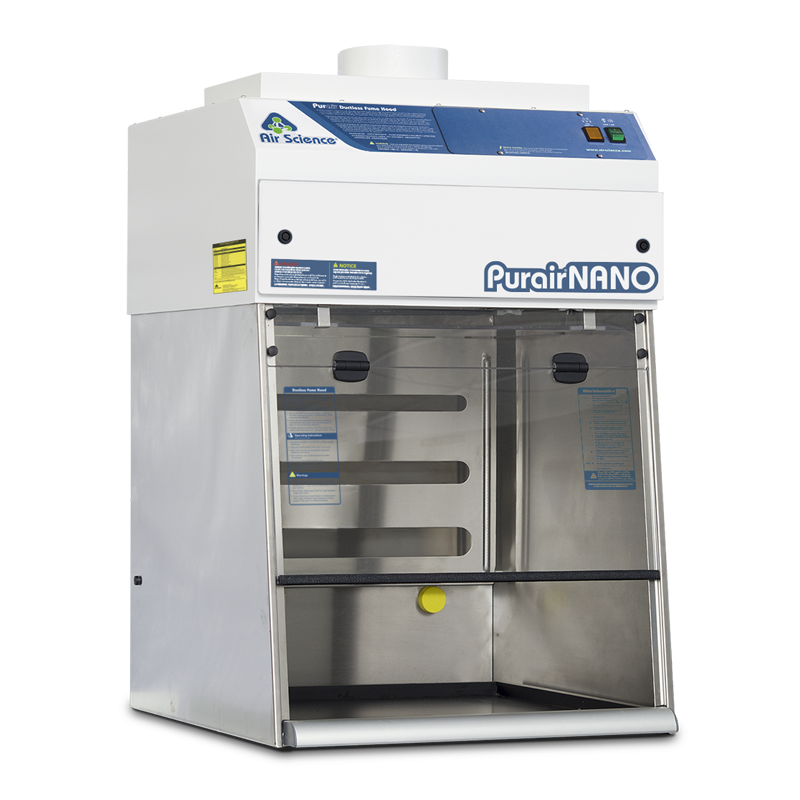
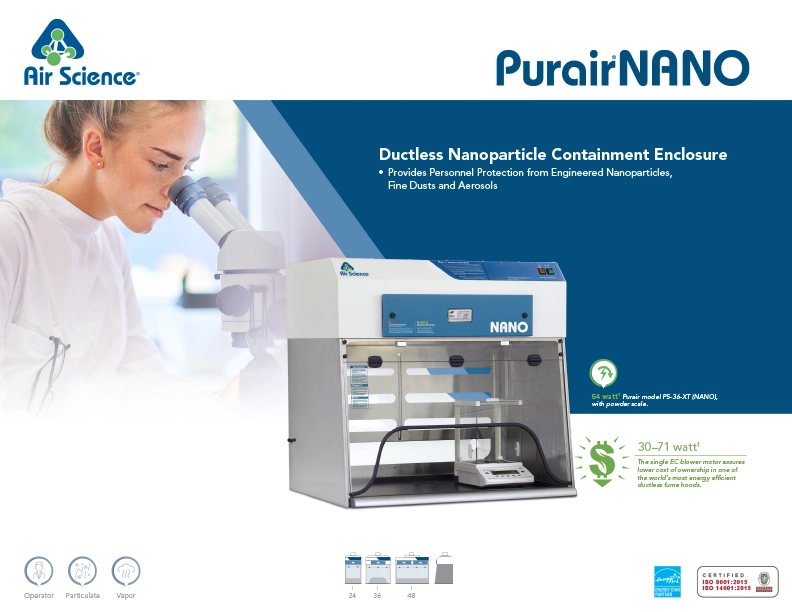
Purair NANO is a specialized ductless containment enclosure designed to help protect laboratory personnel from engineered nanoparticles, fine powders and aerosols generated during research, weighing, transfer and processing. The enclosure is designed for nanomaterial particles below 100 nm and is used in applications including carbon nanotubes, lithium battery materials and rare earth metals.
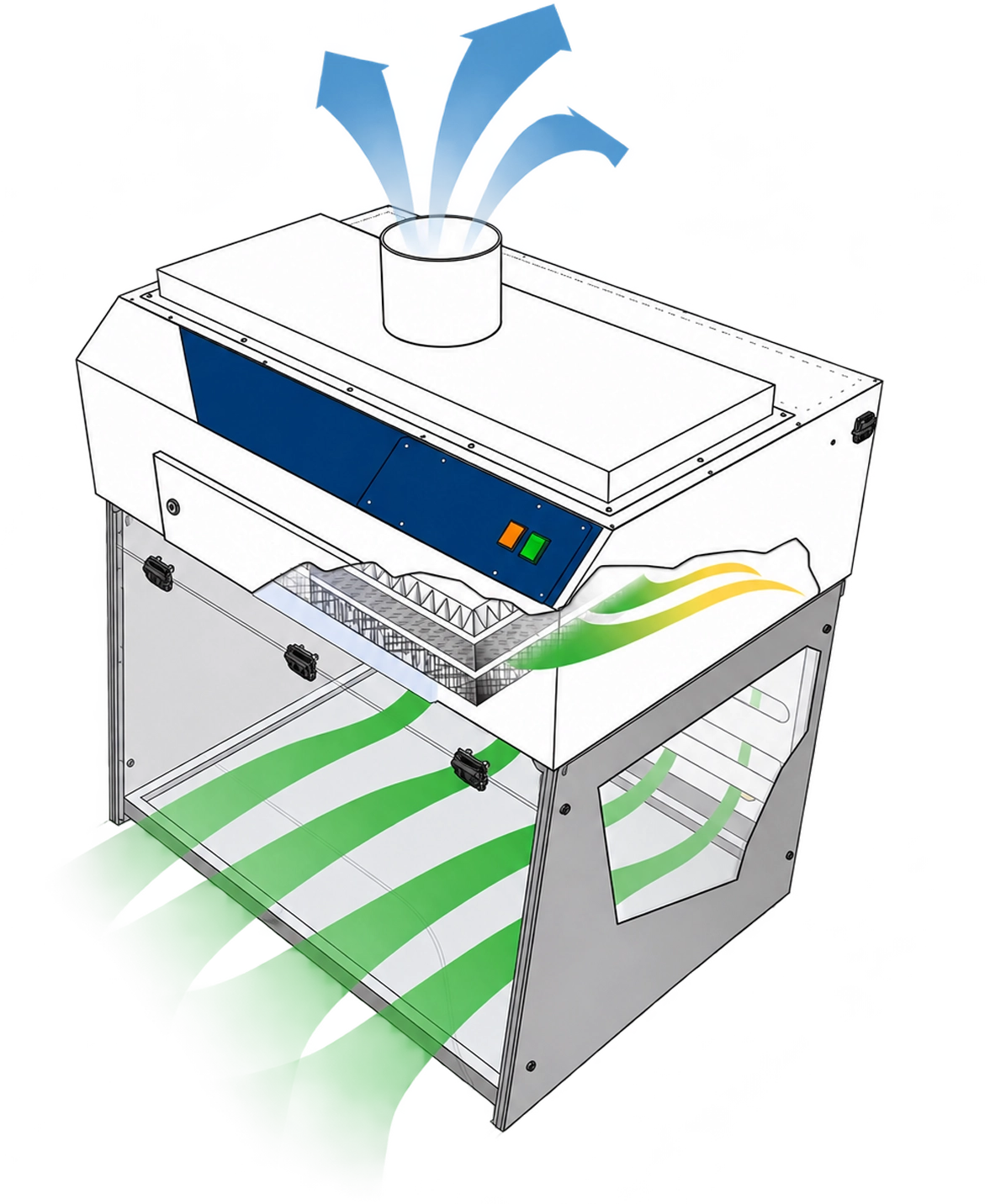
Room air is drawn into the enclosure at a nominal 100 fpm face velocity and contaminated air passes through the Multiplex™ Filtration System. HEPA filtration is standard for particulate capture, ULPA is optional for ultrafine applications, and supplemental activated carbon can be added when compatible chemical vapors are also generated.
OSHA Standard -29 CFR, Safety and Health Regulations for General Industry, 1910.1450: Occupational exposure to hazardous chemicals in laboratories. Part B, definition, laboratory type hood. Please consult your Safety Officer and/or Industrial Hygienist.
OSHA Standard -29 CFR, Safety and Health Regulations for General Industry, 1910.1450: Occupational exposure to hazardous chemicals in laboratories. Part B, definition, laboratory type hood. Please consult your Safety Officer and/or Industrial Hygienist.
OSHA Standard -29 CFR, Safety and Health Regulations for General Industry, 1910.1450: Occupational exposure to hazardous chemicals in laboratories. Part B, definition, laboratory type hood. Please consult your Safety Officer and/or Industrial Hygienist.
Protects the operator from nanomaterial particles (less than 100nm in size) encountered during processing of carbon nanotubes, lithium batteries, and rare earth metals. SafeSwitch™ Filter Shutter System (optional) for safer bag-out filter exchange.
Why Choose the Purair NANO Ductless Nanoparticle Containment Enclosures?
Purair NANO ductless enclosures are designed to contain airborne nanoparticles and fine powders. Horizontal airflow draws particles away from the operator and through the filtration system, while filtered air returns to the laboratory without the need for external exhaust ductwork.
Stainless Steel Benchtop Design
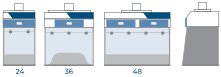
Available in 24″, 36″ and 48″ widths, the Purair NANO features a stainless steel frame and work surface. The rear airflow baffle can be removed for cleaning.
Filtration for Fine Particles
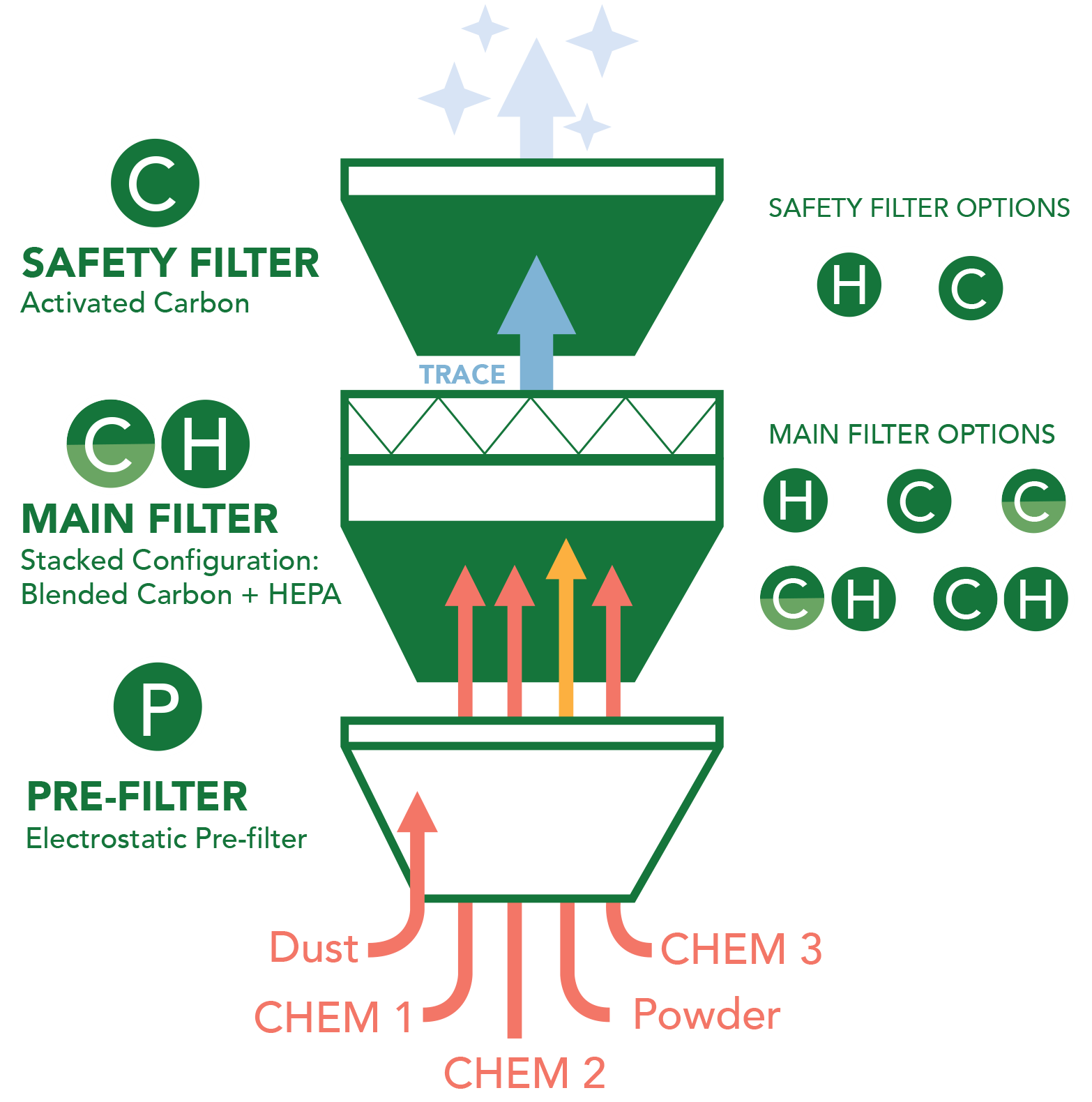
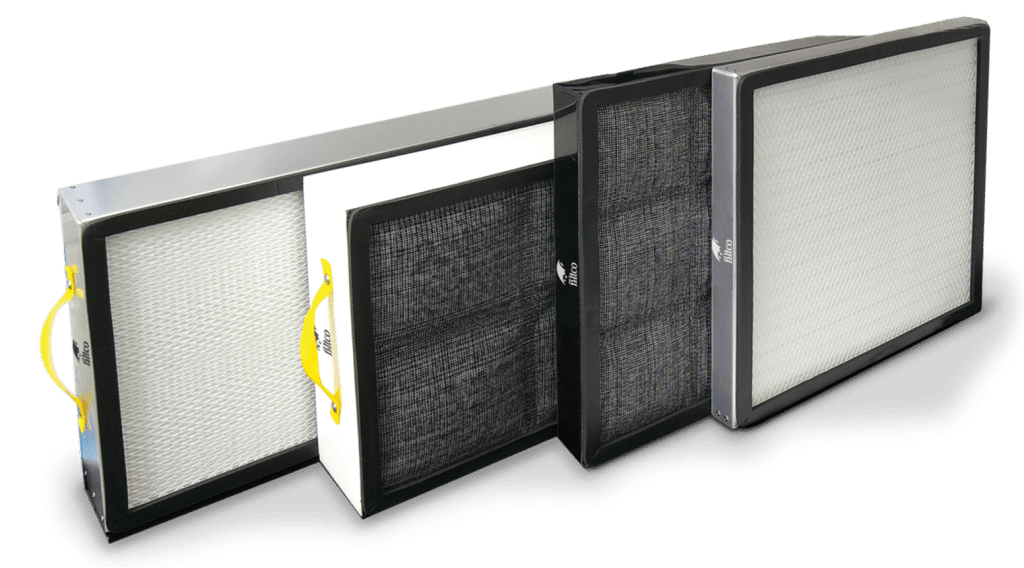
Multiplex™ Filtration Technology pairs an electrostatic prefilter with a standard HEPA filter. Optional ULPA filtration provides higher particle capture efficiency, and supplemental activated carbon filtration is available for applications that also generate chemical vapors.
Filter Monitoring and Maintenance
A standard filter blockage alarm alerts operators when service is needed. The optional SafeSwitch™ filter shutter system helps limit exposure to trapped contaminants during filter changes.
IMPORTANT
Purair NANO is an engineering control for personnel containment; it is not a clean bench or a substitute for a complete nanomaterial exposure-control program. Nanomaterial form, toxicity, quantity, process energy, aerosol generation, chemical-vapor hazards, filter-change procedures and facility requirements should be reviewed before selecting a configuration.
Room air is drawn inward through the enclosure opening at a nominal 100 fpm face velocity to help contain airborne nanoparticles, fine powders and aerosols. Contaminated air passes through an electrostatic pre-filter and the Multiplex™ Filtration System, where standard HEPA filtration captures particulates. Optional ULPA filtration provides higher-efficiency particulate capture, while supplemental activated carbon adsorbs compatible chemical vapors. The EC blower then returns filtered air to the laboratory or directs it to facility exhaust through the available connection.
How Does Multiplex™ Filtration Technology Work?
The Purair NANO uses the Multiplex™ Filtration System to contain airborne nanoparticles and fine powders. An electrostatic prefilter captures larger particles and droplets before they reach the main filter. Standard HEPA filtration is rated at 99.97% efficiency at 0.3 microns, while optional ULPA filtration is rated at 99.999% at 0.12 microns. Both filter types can capture particles smaller than their rated test sizes through mechanisms that include Brownian diffusion.
For workflows that generate both airborne particles and chemical vapors, the system can pair HEPA or ULPA filtration with an activated carbon filter selected for the vapors present.
Purair NANO can be configured with application-specific filtration for different laboratory needs. Activated carbon filters adsorb compatible chemical vapors, while optional HEPA/ULPA filtration captures powders and particulates. Filter selection depends on the chemicals and operating conditions of the application.
The most widely used filter in the range, primarily for solvent, organic and alcohol removal.
ACI Plus!/SUL
Designed to neutralize volatile inorganic acid vapors.
ACR
Iodine and methyl iodide vapors
ACM
Mercury vapor
AMM
Removes vapors from dilute ammonia solutions and to remove low molecular weight amines.
FOR
Designed to oxidize formaldehyde and glutaraldehyde fumes; It is widely used in hospital pathology laboratories.
HEPA/UPLA
Powders and particulates.
Nanomaterial Research & Laboratory Applications
Purair NANO containment enclosures provide specialized protection for laboratory personnel working with engineered nanoparticles, fine powders and aerosols. With standard HEPA filtration, optional ULPA filtration and three size configurations, they accommodate a variety of nanomaterial research, handling and processing applications.
Carbon nanotube research and processing
Lithium-ion battery material research
Rare earth metal powder handling
Nanoparticle weighing and transfer
Fine-powder dispensing and sample preparation
Aerospace and advanced-materials research
Academic and government laboratories
Nanomaterial-containing aerosols
Research requiring localized HEPA-filtered particulate containment
Frequently Asked Questions
Below are answers to our frequently asked questions and links to additional helpful information.
What is Purair NANO?
Purair NANO is a ductless nanoparticle containment enclosure designed to help protect personnel from engineered nanoparticles, fine powders and aerosols generated during laboratory work.
What particle sizes is Purair NANO designed for?
Air Science specifies the enclosure for nanoparticles and fine powders below 100 nm, including applications involving carbon nanotubes, lithium battery materials and rare earth metals.
Does Purair NANO protect the operator or the sample?
Its primary purpose is operator/personnel containment. It should not be confused with a laminar-flow clean bench intended primarily to protect the product or sample.
How does Purair NANO contain nanoparticles?
Inward airflow draws airborne contamination into the enclosure and through particulate filtration rather than allowing it to disperse into the laboratory.
What is the face velocity?
The published nominal face velocity is 100 fpm for the 24-, 36- and 48-inch models.
Can a HEPA filter capture nanoparticles smaller than 0.3 microns?
Yes. The 0.3-micron HEPA rating is a standardized efficiency reference, not a lower particle-size cutoff. Very small particles are also captured through filtration mechanisms including diffusion.
What is the HEPA efficiency?
The published HEPA efficiency is 99.97% at 0.3 microns.
Does Purair NANO remove chemical vapors?
The standard HEPA filter is for particulates, not vapors. A supplemental activated-carbon filter can be selected for compatible chemical vapors.
Can carbon filtration capture nanoparticles?
No. The brochure specifically distinguishes the functions: carbon is for compatible vapors, while HEPA/ULPA filtration is used for particles.
Can Purair NANO operate without external ductwork?
Yes, when the application is appropriate for filtered recirculation. The unit is designed for ductless operation and returns filtered air to the room.
Can Purair NANO be exhausted outside?
Yes. Every unit includes a removable 6-inch exhaust connection for connection to outside or facility exhaust when appropriate.
Can I use Purair NANO for rare earth powders?
Rare earth metal processing is identified as an application. Application review is still recommended because hazards vary by material and process.
Not Sure Which Ductless Fume Hood or Filter You Need?
Air Science can review your application, chemicals, concentrations, quantities, and process requirements to help determine an appropriate ductless fume hood and filtration configuration.