Compact, Versatile Chemical Containment for General Laboratory Applications
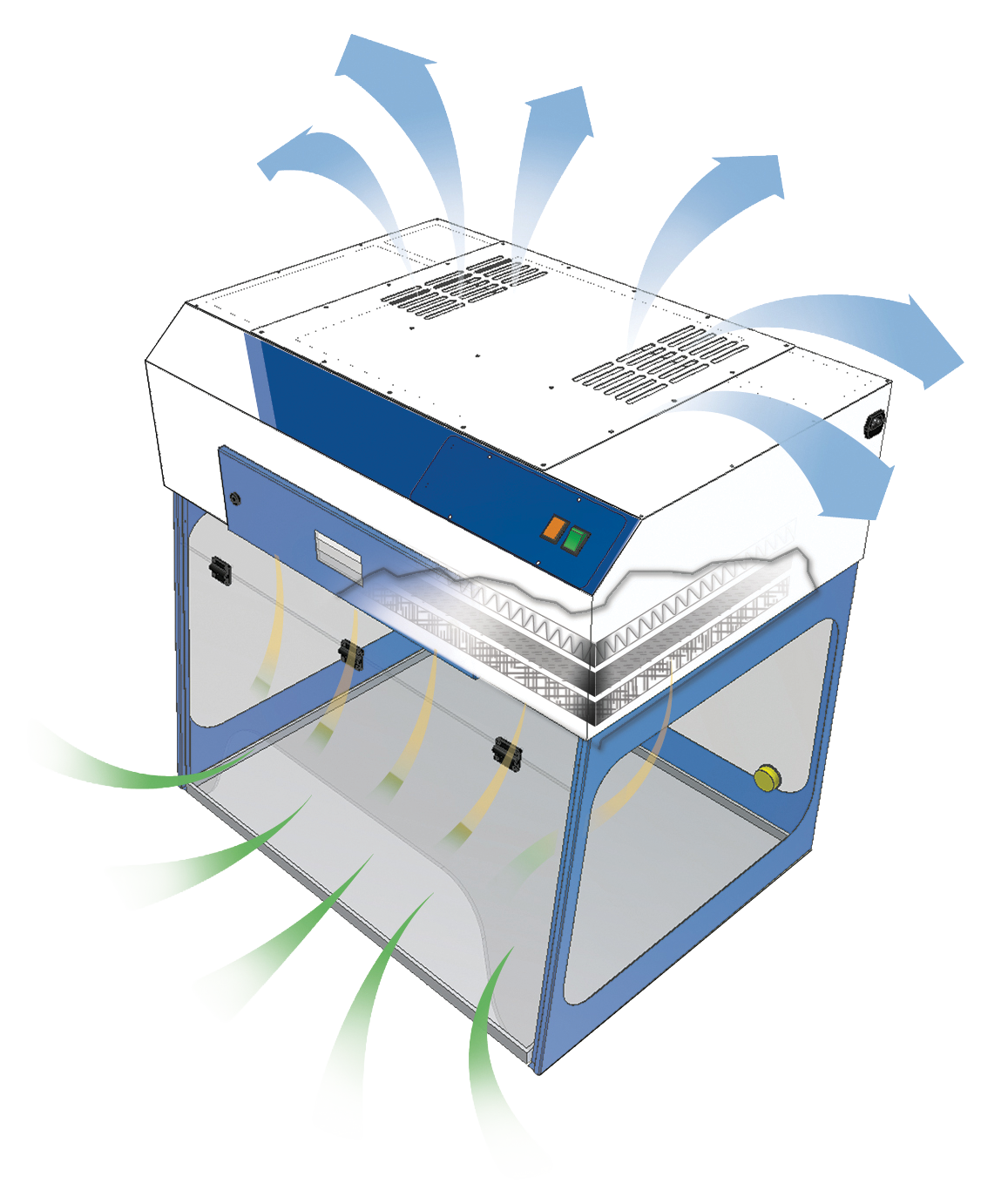
Purair® BASIC ductless fume hoods are compact, self-contained laboratory enclosures designed to protect the user and environment from hazardous vapors generated on the work surface. Contaminated air is drawn into the hood, passed through application-specific filtration and returned to the laboratory without requiring connection to a building exhaust system.
OSHA Standard -29 CFR, Safety and Health Regulations for General Industry, 1910.1450: Occupational exposure to hazardous chemicals in laboratories. Part B, definition, laboratory type hood. This product may assist you with compliance or as part of your chemical hygiene plan. Please consult your Safety Officer and/or Industrial Hygienist.
OSHA Standard -29 CFR, Safety and Health Regulations for General Industry, 1910.1450: Occupational exposure to hazardous chemicals in laboratories. Part B, definition, laboratory type hood. This product may assist you with compliance or as part of your chemical hygiene plan. Please consult your Safety Officer and/or Industrial Hygienist.
OSHA Standard -29 CFR, Safety and Health Regulations for General Industry, 1910.1450: Occupational exposure to hazardous chemicals in laboratories. Part B, definition, laboratory type hood. This product may assist you with compliance or as part of your chemical hygiene plan. Please consult your Safety Officer and/or Industrial Hygienist.
OSHA Standard -29 CFR, Safety and Health Regulations for General Industry, 1910.1450: Occupational exposure to hazardous chemicals in laboratories. Part B, definition, laboratory type hood. This product may assist you with compliance or as part of your chemical hygiene plan. Please consult your Safety Officer and/or Industrial Hygienist.
OSHA Standard -29 CFR, Safety and Health Regulations for General Industry, 1910.1450: Occupational exposure to hazardous chemicals in laboratories. Part B, definition, laboratory type hood. This product may assist you with compliance or as part of your chemical hygiene plan. Please consult your Safety Officer and/or Industrial Hygienist.
OSHA Standard -29 CFR, Safety and Health Regulations for General Industry, 1910.1450: Occupational exposure to hazardous chemicals in laboratories. Part B, definition, laboratory type hood. This product may assist you with compliance or as part of your chemical hygiene plan. Please consult your Safety Officer and/or Industrial Hygienist.
Purair® BASIC combines compact design, flexible filtration and energy-efficient operation for general laboratory applications. Available in three widths with standard-depth and reduced-depth configurations, it provides a versatile solution for laboratories where countertop space, chemical containment and application-specific filtration are important considerations.
Compact, Versatile Design
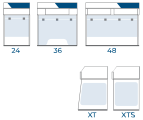
Available in 24″, 36″ and 48″ widths, with standard-depth XT and reduced-depth XTS models to accommodate different laboratory countertops and space requirements.
Flexible Filtration
Multiplex™ Filtration Technology offers activated carbon and optional HEPA/ULPA configurations to address different chemical vapor and particulate filtration needs.
Energy-Efficient Operation
A high-efficiency EC blower and LED lighting help reduce energy consumption, while the ductless design eliminates the need for external exhaust ductwork.
IMPORTANT
Ductless fume hood suitability is application-specific. Chemical type, concentration, quantity, evaporation rate, temperature, frequency and duration of use, filter media, and operating conditions should be evaluated before selecting a ductless fume hood and filter configuration.
Room air is drawn inward through the hood opening to help contain contaminants generated inside the enclosure. The contaminated air passes through an electrostatic pre-filter and the selected Multiplex™ Filtration System. Activated carbon adsorbs compatible chemical vapors, while optional HEPA or ULPA filtration captures particulates. The EC blower then returns filtered air to the laboratory.
How Does Multiplex™ Filtration Technology Work?
At the heart of Purair® BASIC is the Multiplex™ Filtration System. It combines an electrostatic pre-filter, a primary filter and, where required, an optional secondary or stacked filter. The system can be configured for chemical adsorption, particulate filtration or applications requiring both.
The electrostatic pre-filter helps protect the main filter from dust, mists and particulates. Activated carbon filters adsorb compatible chemical vapors, while optional HEPA or ULPA filters capture fine particulates. Different filter media can be selected or combined based on the chemicals, operating conditions and filtration requirements of the application.
Purair® BASIC can be configured with application-specific filtration for different laboratory needs. Activated carbon filters adsorb compatible chemical vapors, while optional HEPA/ULPA filtration captures powders and particulates. Filter selection depends on the chemicals and operating conditions of the application.
The most widely used filter in the range, primarily for solvent, organic and alcohol removal.
ACI Plus!/SUL
Designed to neutralize volatile inorganic acid vapors.
ACR
Iodine and methyl iodide vapors
ACM
Mercury vapor
AMM
Removes vapors from dilute ammonia solutions and to remove low molecular weight amines.
FOR
Designed to oxidize formaldehyde and glutaraldehyde fumes; It is widely used in hospital pathology laboratories.
HEPA/UPLA
Powders and particulates.
General Laboratory Applications
Purair® BASIC ductless fume hoods provide compact, flexible containment for a variety of general laboratory applications. With application-specific filtration options and multiple size configurations, they can accommodate a range of laboratory procedures and equipment.
Compounding and balance enclosures
Microscopes and robotic equipment
Forensic laboratory procedures
Histology and microscopy
Educational and classroom demonstrations
Pharmaceutical, veterinary and dental applications
Fingerprinting and powder weighing
Sample preparation
Compatible solvent cleaning applications
Processes requiring compact, filtered containment
Frequently Asked Questions
Below are answers to our frequently asked questions and links to additional helpful information.
What is a Purair® BASIC ductless fume hood?
Purair® BASIC is a compact, self-contained laboratory fume hood that draws contaminated air away from the operator, passes it through application-specific filtration and returns filtered air to the laboratory. It is designed for general laboratory applications involving compatible chemicals and operating conditions.
What is the difference between Purair® BASIC XT and XTS models?
XT models are 27 inches deep, while reduced-depth XTS models are 24 inches deep for shallower countertops. Both configurations are available in 24-, 36- and 48-inch widths and provide a 23.6-inch internal working height.
What is the difference between Purair® BASIC and Purair® ADVANCED?
Purair® BASIC is a compact, versatile solution for general laboratory applications. Purair® ADVANCED offers a larger workspace, high-capacity filtration and a broader range of sizes and configurations for more demanding applications.
How do I know if Purair® BASIC is suitable for my application?
Suitability depends on the chemicals, concentrations, quantities, temperatures, evaporation rates and frequency and duration of use. Air Science should review the complete chemical and application information before a hood and filter configuration are selected.
What chemicals can be used in Purair® BASIC?
Many solvent, acid, formaldehyde, ammonia and other chemical applications may be suitable with the appropriate activated carbon filtration. Compatibility depends on the specific chemicals, quantities and operating conditions and should be reviewed before use.
Does Purair® BASIC require external ductwork?
No. In standard ductless operation, contaminated air passes through the selected filtration system and filtered air is returned to the laboratory without requiring connection to a building exhaust system.
Can Purair® BASIC be used for biological applications?
Purair® BASIC is a ductless chemical fume hood, not a substitute for a certified Class II biological safety cabinet. Applications involving infectious or potentially infectious biological agents require evaluation for appropriate biological containment equipment.
How does Multiplex™ Filtration Technology work?
Multiplex™ Filtration Technology combines an electrostatic pre-filter with application-specific primary filtration and optional secondary or stacked filters. Activated carbon adsorbs compatible chemical vapors, while HEPA or ULPA filters capture particulates.
Can Purair® BASIC handle multiple chemicals?
In many applications, yes. Multiplex™ Filtration Technology allows compatible filter media to be selected or combined for multiple-use applications. The complete chemical list and operating conditions must be reviewed before selecting the filtration configuration.
Can HEPA or ULPA filtration be used with activated carbon?
Yes, in appropriate configurations. Activated carbon is used for compatible chemical vapors, while HEPA or ULPA filtration captures particulates. Applications involving both hazards may require combined or stacked filtration.
What airflow and filter monitoring features are available?
Purair® BASIC operates at a nominal face velocity of 100 fpm and includes a standard filter blockage alarm. Optional FSA, Autocal and combined monitoring controllers provide additional airflow and/or filter monitoring functions.
The filter’s contamination history should determine how it is handled and disposed of. Consult your facility’s EHS or waste-management personnel and follow applicable federal, state, local, and facility requirements.
How often should activated carbon filters be replaced?
There is no universal replacement interval. Filter life depends on chemical type, concentration, quantity, temperature, evaporation rate and frequency of use. An application-specific filter monitoring and replacement program should be established.
How do I know when an activated carbon filter is saturated?
Activated carbon can become saturated without visible changes. Filter condition should be assessed through appropriate monitoring, testing, application history and planned replacement procedures. Odor alone should not be used to determine filter saturation.
Can I replace the filters in Purair® BASIC myself?
Purair® BASIC filters are designed for straightforward access and replacement. Appropriate personal protective equipment and handling procedures may be required depending on the contaminants captured. Always follow the operating manual and facility safety procedures.
Not Sure Which Ductless Fume Hood or Filter You Need?
Air Science can review your application, chemicals, concentrations, quantities, and process requirements to help determine an appropriate ductless fume hood and filtration configuration.