
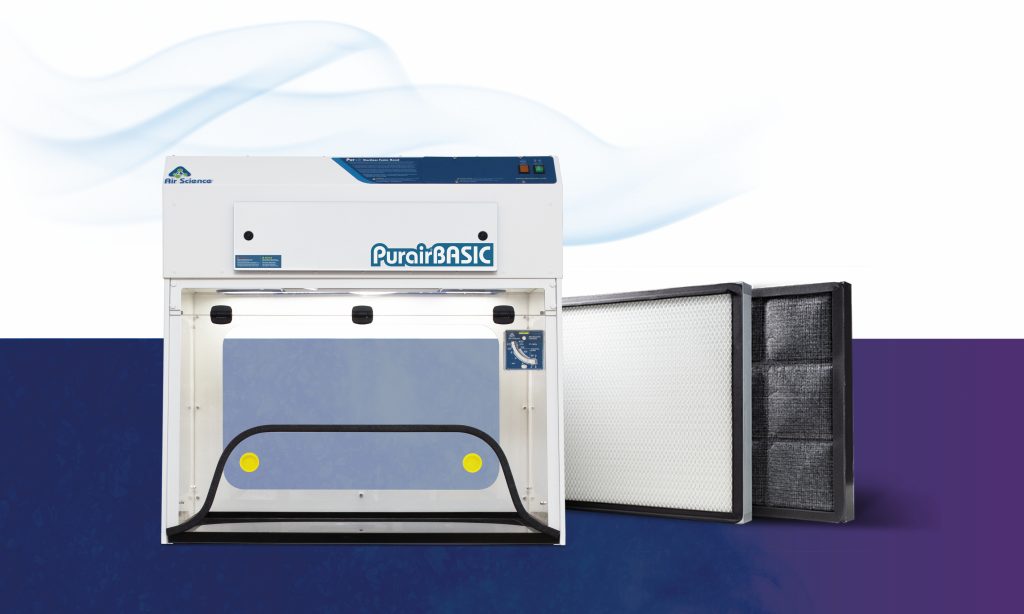
Filters are easy to overlook during day-to-day lab work, but they keep equipment running safely and effectively. Over time they collect particles, vapors and other contaminants, and as they load up, airflow and filtration performance suffer. Staying ahead of filter maintenance reduces downtime, protects performance and extends the life of your equipment.
So how often should lab filters be replaced? General guidelines are a starting point, but the right schedule depends on the filter type, how the equipment is used, lab conditions and the manufacturer’s recommendations.
Why Regular Filter Maintenance Matters
Each filter does a specific job. Pre-filters catch larger particles. HEPA filters pull out airborne particulates. Carbon cartridges handle chemical vapors. When any of them stop doing that job well, the whole system feels it.
Regular filter inspection and replacement can help:
- Maintain proper airflow
- Support consistent filtration performance
- Reduce unnecessary strain on equipment
- Minimize unexpected downtime
- Extend equipment life
- Support a safer laboratory environment
How Often Should Lab Filters Be Replaced?
As a general guideline, activated carbon filters need replacement about every 12 months, while HEPA filters typically last one to two years. Actual schedules vary based on the equipment, application, frequency of use and operating conditions.
Start with the manufacturer’s recommendation for your specific equipment. Then inspect regularly, because a filter that’s working hard may need attention before its scheduled interval.
Understanding Common Laboratory Filter Types
Different filters do different jobs, so their maintenance needs vary.
Pre-filter cartridges: These catch larger particles before they reach the main filtration stages. They’re the first line of defense, which means they load up first. Check them often for buildup and replace per the manufacturer’s guidance.
HEPA filters: These capture airborne particulates. How long they last depend on how much the equipment runs, the environment and the filter’s own performance.
Activated carbon filter cartridges: These capture chemical vapors and fumes. Their lifespan varies a lot, because it depends on which chemicals you’re using, how concentrated they are and how often. Always use carbon cartridges with the chemical families they’re intended for.
Signs Your Lab Filters May Need Replacement
A replacement schedule provides a starting point, but laboratory personnel should also pay attention to equipment performance between scheduled service intervals.
Changes in airflow, equipment alarms or filter-status indicators and visible buildup can indicate that a filter needs inspection or service.
Don’t wait for reduced performance to remind you. Follow the installation, operation and maintenance guidelines that came with your equipment, and make routine filter checks part of regular lab maintenance.
Make Filter Replacement Part of Preventive Maintenance
The easiest way to stay ahead of replacement is to fold it into your lab’s preventive maintenance program.
Keep a record of installation, inspection and replacement dates for each piece of equipment. That makes it easier to track filter history, follow manufacturer recommendations and plan service before it becomes an interruption.
Replacement procedures vary by equipment and contaminant, so follow manufacturer instructions and applicable lab safety procedures when inspecting, handling or replacing filters.
Keep Your Equipment Performing as Intended
A good replacement schedule is more than a date on the calendar. Manufacturer recommendations, equipment use, filter condition and lab conditions all help determine when maintenance is needed.
When it’s time to replace a filter, choosing the right one matters as much as replacing it on schedule. Filtco® offers replacement carbon, HEPA and ULPA filters for many major ductless fume hood brands, helping labs find the filtration they need to keep equipment at its best.
Review your schedule regularly and stay ahead of maintenance to support reliable performance and a safer, more efficient lab.
Resources:
Air Science Laboratory Filtration Systems — https://www.airscience.com/filtration
Air Science Activated Carbon Filters — https://www.airscience.com/filtration/carbon-filters
Air Science HEPA & ULPA Filters — https://www.airscience.com/filtration/hepa-and-ulpa-filters
Air Science Multiplex™ Filtration System — https://www.airscience.com/filtration/multiplex-filtration
Air Science Carbon and HEPA Filter Replacement and Disposal — https://www.airscience.com/carbon-and-hepa-filter-replacement-and-disposal-safety-first