
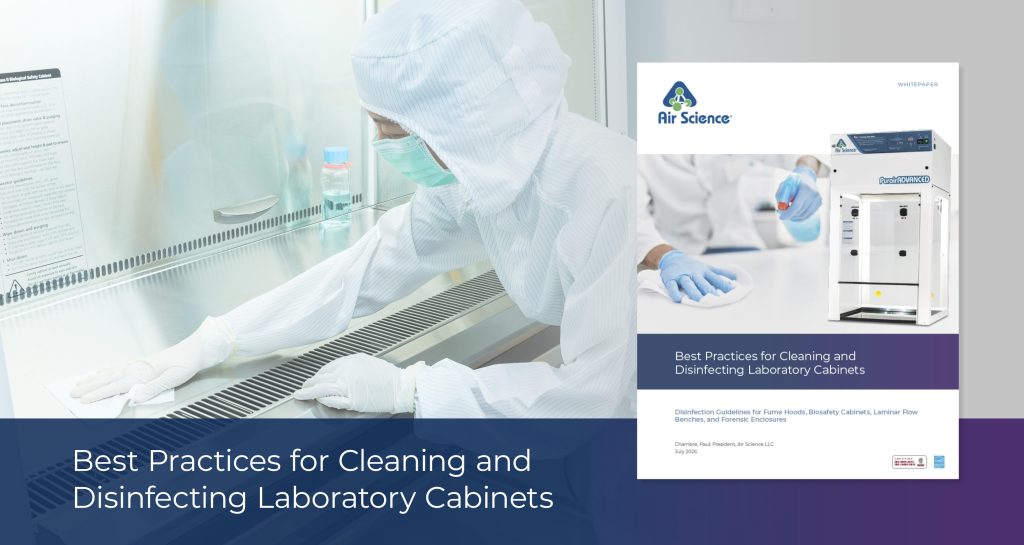
Proper cleaning protects your laboratory, extends equipment life, and helps maintain the performance of critical containment and filtration systems.
Keeping laboratory cabinets clean is about more than appearance — it’s essential for maintaining safety, protecting valuable research, and preserving equipment performance. Whether you’re using a biosafety cabinet, laminar flow workstation, forensic enclosure, or fume hood, following the proper cleaning and disinfection procedures helps reduce contamination risks while extending the life of your equipment.
Not all laboratory cabinets are constructed from the same materials or designed for the same applications. Acrylic, stainless steel, polypropylene, and polycarbonate each respond differently to cleaning chemicals. Using incompatible disinfectants or improper cleaning techniques can lead to corrosion, surface damage, reduced visibility, or premature equipment wear. That’s why it’s important to follow the manufacturer’s recommendations for both cleaning agents and procedures.
An effective maintenance program also recognizes that cleaning and disinfection are separate processes. Removing debris and residues before applying a disinfectant improves its effectiveness and helps maintain a clean, contamination-controlled workspace. Regular maintenance not only protects laboratory personnel and research but also helps ensure reliable cabinet performance over time.
For a more comprehensive look at cleaning procedures, material compatibility, disinfectant selection, and laboratory best practices, download our free white paper: Best Practices for Cleaning and Disinfecting Laboratory Cabinets.
Why Proper Cleaning Matters
Keeping laboratory cabinets properly cleaned and disinfected helps protect personnel, products, and research while preserving equipment performance. Following recommended procedures can reduce contamination risks, improve reliability, and support regulatory compliance.
Benefits
- Helps reduce contamination risks
- Extends the life of laboratory equipment
- Protects cabinet materials from chemical damage
- Supports consistent equipment performance
- Improves laboratory safety and compliance
- Provides guidance on compatible cleaning and disinfecting practices
Resources
Download the White Paper: