Controlled, Repeatable Latent Print Development with Integrated Vapor Containment
Safely develop latent fingerprints using ethyl cyanoacrylate vapor in a controlled chamber where humidity, fuming time and purge conditions can be managed for consistent, repeatable processing.
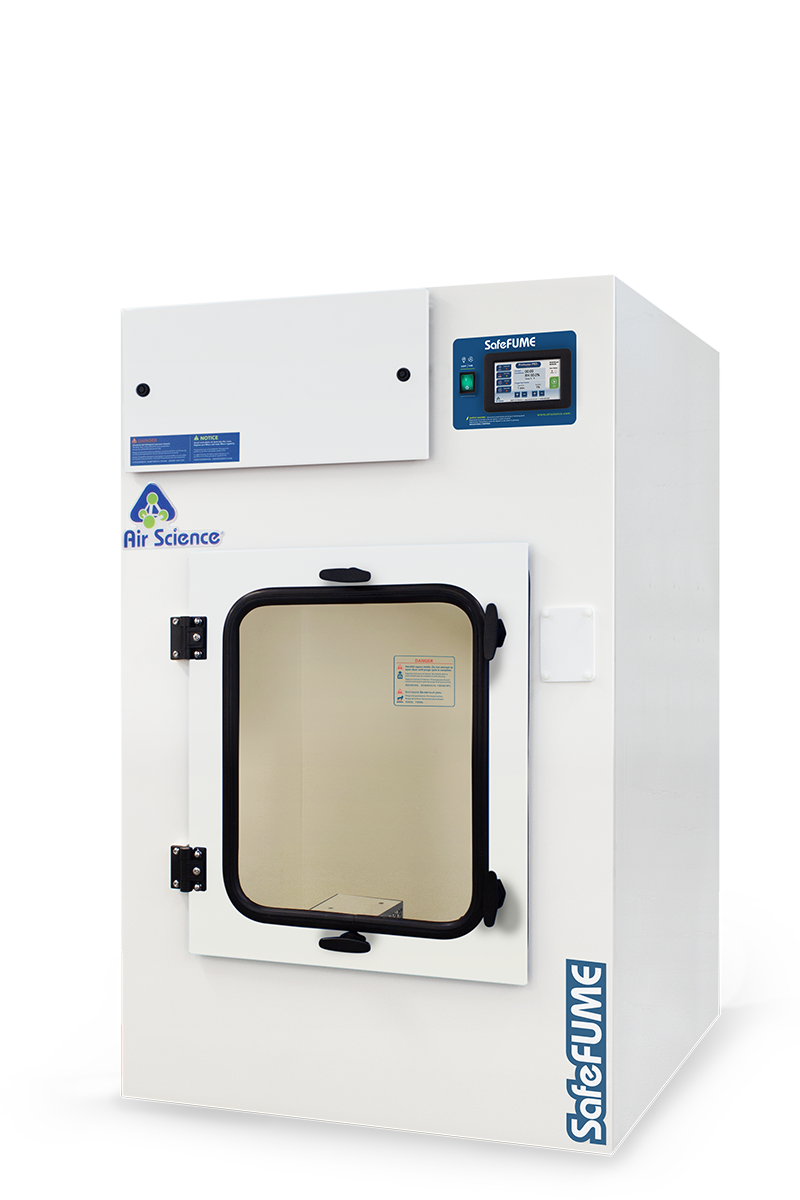
SafeFUME combines automatic cycle control, secure evidence positioning, a partial-vacuum filtration plenum and Multiplex™ activated-carbon filtration in a self-contained system that does not require connection to an outside exhaust system.
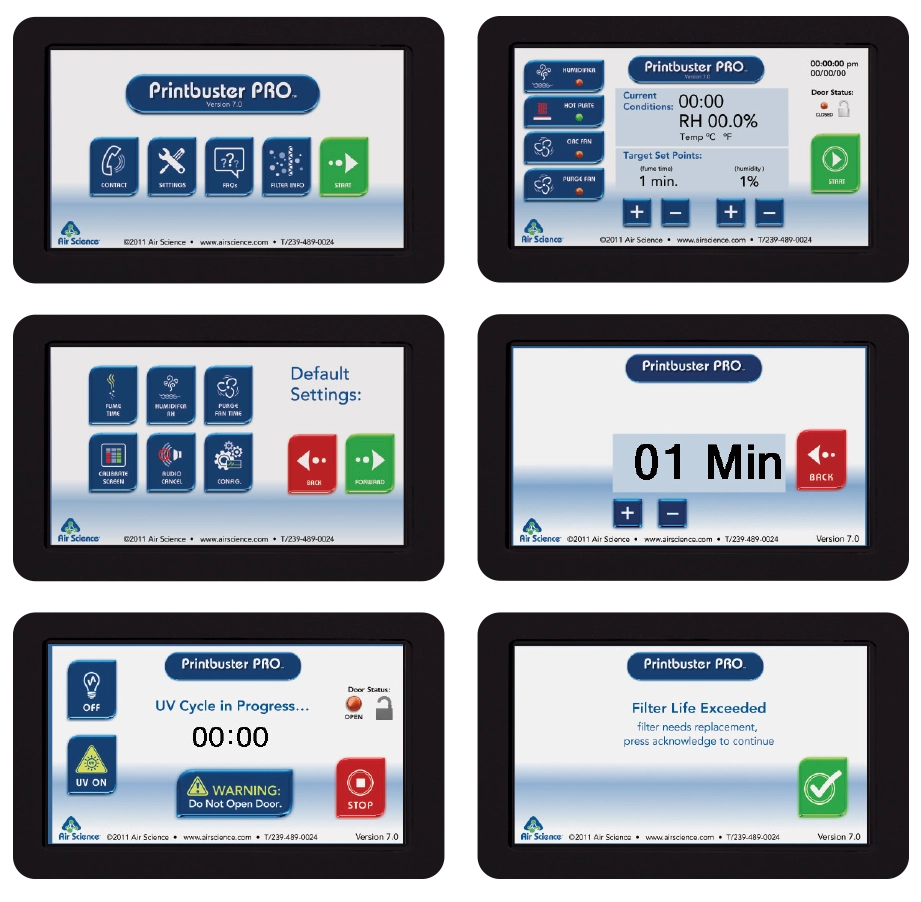
Fan Manual On Off, Printbuster PRO, Programmable Heat and Humidity Control
Internal Height
12.75" | 325 mm
External Width
24" | 610 mm
External Depth
17.25" | 705 mm
External Height
24" | 610 mm
Shipping Width
40" | 1016 mm
Shipping Depth
40" | 1016 mm
Advanced Hot Plate
AHOTPLATE110
Advanced Hot Plate
AHOTPLATE230
Base Stand, Mobile, with Casters
CART-25
Electronic Lock*
E-LOCK
UV lamp
UV-CA
* Factory installed; specify when ordering
OSHA
OSHA Standard -29 CFR, Safety and Health Regulations for General Industry, 1910.1450: Occupational exposure to hazardous chemicals in laboratories. Part B, definition, laboratory type hood. Please consult your Safety Officer and/or Industrial Hygienist.
Fan Manual On Off, Printbuster PRO, Programmable Heat and Humidity Control
Internal Height
36" | 914 mm
External Width
30" | 762 mm
External Depth
28" | 711 mm
External Height
48" | 1220 mm
Shipping Width
40" | 1016 mm
Shipping Depth
40" | 1016 mm
Advanced Hot Plate
AHOTPLATE110
Advanced Hot Plate
AHOTPLATE230
Base Stand, Mobile, with Casters
CART-30
Electronic Lock*
E-LOCK
UV lamp
UV-CA
* Factory installed; specify when ordering
OSHA
OSHA Standard -29 CFR, Safety and Health Regulations for General Industry, 1910.1450: Occupational exposure to hazardous chemicals in laboratories. Part B, definition, laboratory type hood. Please consult your Safety Officer and/or Industrial Hygienist.
Fan Manual On Off, Printbuster PRO, Programmable Heat and Humidity Control
Internal Height
36" | 914 mm
External Width
48" | 1219 mm
External Depth
28" | 711 mm
External Height
48" | 1219 mm
Shipping Width
58" | 1473 mm
Shipping Depth
40" | 1016 mm
Advanced Hot Plate
AHOTPLATE110
Advanced Hot Plate
AHOTPLATE230
Base Stand, Mobile, with Casters
CART-50
Electronic Lock*
E-LOCK
UV lamp
UV-CA
* Factory installed; specify when ordering
OSHA
OSHA Standard -29 CFR, Safety and Health Regulations for General Industry, 1910.1450: Occupational exposure to hazardous chemicals in laboratories. Part B, definition, laboratory type hood. Please consult your Safety Officer and/or Industrial Hygienist.
Fan Manual On Off, Printbuster PRO, Programmable Heat and Humidity Control
Internal Height
36" | 914 mm
External Width
60" | 1524 mm
External Depth
28" | 711 mm
External Height
48" | 1219 mm
Shipping Width
65" | 1651 mm
Shipping Depth
40" | 1016 mm
Advanced Hot Plate
AHOTPLATE110
Advanced Hot Plate
AHOTPLATE230
Base Stand, Mobile, with Casters
CART-60
Electronic Lock*
E-LOCK
UV lamp
UV-CA
* Factory installed; specify when ordering
OSHA
OSHA Standard -29 CFR, Safety and Health Regulations for General Industry, 1910.1450: Occupational exposure to hazardous chemicals in laboratories. Part B, definition, laboratory type hood. Please consult your Safety Officer and/or Industrial Hygienist.
Fan Manual On Off, Printbuster PRO, Programmable Heat and Humidity Control
Internal Height
57.24" | 1454 mm
External Width
30" | 762 mm
External Depth
28" | 711 mm
External Height
74.88" | 1902 mm
Shipping Width
40" | 1016 mm
Shipping Depth
40" | 1016 mm
Advanced Hot Plate
AHOTPLATE110
Advanced Hot Plate
AHOTPLATE230
Basic Hot Plate
BHOTPLATE110
Basic Hot Plate
BHOTPLATE230
Electronic Lock*
E-LOCK
* Factory installed; specify when ordering
OSHA
OSHA Standard -29 CFR, Safety and Health Regulations for General Industry, 1910.1450: Occupational exposure to hazardous chemicals in laboratories. Part B, definition, laboratory type hood. Please consult your Safety Officer and/or Industrial Hygienist.
Fan Manual On Off, Printbuster PRO, Programmable Heat and Humidity Control
Internal Height
57.24" | 1454 mm
External Width
48" | 1219 mm
External Depth
28" | 711 mm
External Height
74.88" | 1902 mm
Shipping Width
58" | 1473 mm
Shipping Depth
40" | 1016 mm
Advanced Hot Plate
AHOTPLATE110
Advanced Hot Plate
AHOTPLATE230
Basic Hot Plate
BHOTPLATE110
Basic Hot Plate
BHOTPLATE230
Electronic Lock*
E-LOCK
* Factory installed; specify when ordering
OSHA
OSHA Standard -29 CFR, Safety and Health Regulations for General Industry, 1910.1450: Occupational exposure to hazardous chemicals in laboratories. Part B, definition, laboratory type hood. Please consult your Safety Officer and/or Industrial Hygienist.
Fan Manual On Off, Printbuster PRO, Programmable Heat and Humidity Control
Internal Height
57.24" | 1454 mm
External Width
60" | 1524 mm
External Depth
28" | 705 mm
External Height
74.88" | 1902 mm
Shipping Width
70" | 1778 mm
Shipping Depth
40" | 1016 mm
Advanced Hot Plate
AHOTPLATE110
Advanced Hot Plate
AHOTPLATE230
Basic Hot Plate
BHOTPLATE110
Basic Hot Plate
BHOTPLATE230
Electronic Lock*
E-LOCK
* Factory installed; specify when ordering
OSHA
OSHA Standard -29 CFR, Safety and Health Regulations for General Industry, 1910.1450: Occupational exposure to hazardous chemicals in laboratories. Part B, definition, laboratory type hood. Please consult your Safety Officer and/or Industrial Hygienist.
Fan Manual On Off, Printbuster PRO, Programmable Heat and Humidity Control
Internal Height
2 @ 24" | 2 @ 610 mm
External Width
30" | 762 mm
External Depth
28" | 711 mm
External Height
82.25" | 2089 mm
Shipping Width
40" | 1016 mm
Shipping Depth
48" | 1219 mm
Advanced Hot Plate
AHOTPLATE110
Advanced Hot Plate
AHOTPLATE230
Basic Hot Plate
BHOTPLATE110
Basic Hot Plate
BHOTPLATE230
Electronic Lock*
E-LOCK
* Factory installed; specify when ordering
OSHA
OSHA Standard -29 CFR, Safety and Health Regulations for General Industry, 1910.1450: Occupational exposure to hazardous chemicals in laboratories. Part B, definition, laboratory type hood. Please consult your Safety Officer and/or Industrial Hygienist.
Fan Manual On Off, Printbuster PRO, Programmable Heat and Humidity Control
Internal Height
2 @ 24, 1 @ 57.25" | 2 @ 610, 1 @ 1454 mm
External Width
60" | 1524 mm
External Depth
27.75" | 705 mm
External Height
75" | 1905 mm
Shipping Width
70" | 1778 mm
Shipping Depth
40" | 1016 mm
Advanced Hot Plate
AHOTPLATE110
Advanced Hot Plate
AHOTPLATE230
Basic Hot Plate
BHOTPLATE110
Basic Hot Plate
BHOTPLATE230
Electronic Lock*
E-LOCK
* Factory installed; specify when ordering
OSHA
OSHA Standard -29 CFR, Safety and Health Regulations for General Industry, 1910.1450: Occupational exposure to hazardous chemicals in laboratories. Part B, definition, laboratory type hood. Please consult your Safety Officer and/or Industrial Hygienist.
Fan Manual On Off, Printbuster PRO, Programmable Heat and Humidity Control
Internal Height
4 @ 24" | 4 @ 610 mm
External Width
60" | 1524 mm
External Depth
27.75" | 705 mm
External Height
75" | 1905 mm
Shipping Width
70" | 1778 mm
Shipping Depth
40" | 1016 mm
Advanced Hot Plate
AHOTPLATE110
Advanced Hot Plate
AHOTPLATE230
Basic Hot Plate
BHOTPLATE110
Basic Hot Plate
BHOTPLATE230
Electronic Lock*
E-LOCK
* Factory installed; specify when ordering
OSHA
OSHA Standard -29 CFR, Safety and Health Regulations for General Industry, 1910.1450: Occupational exposure to hazardous chemicals in laboratories. Part B, definition, laboratory type hood. Please consult your Safety Officer and/or Industrial Hygienist.
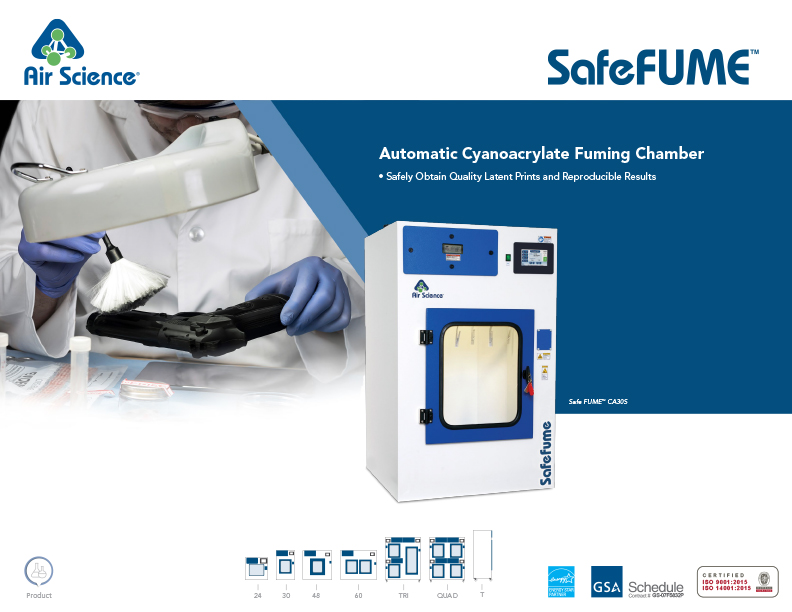
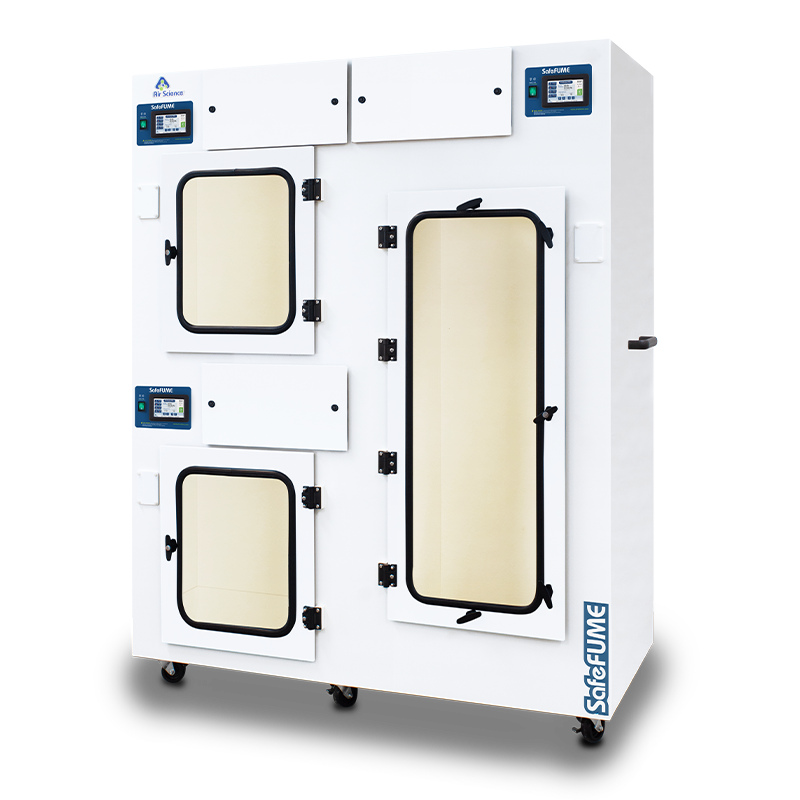
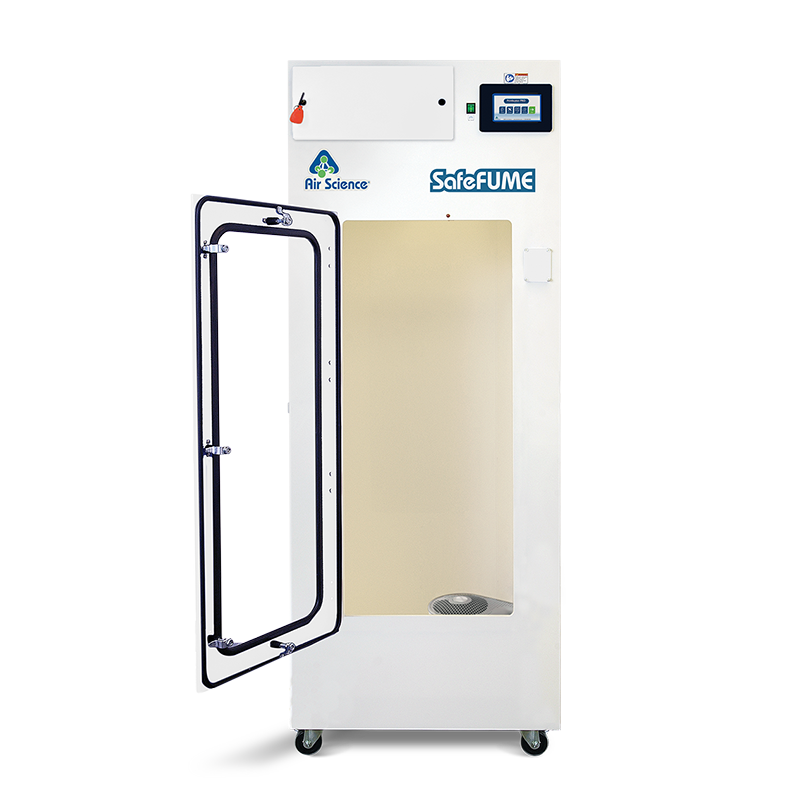
SafeFUME Automatic Cyanoacrylate Fuming Chambers provide controlled, repeatable latent fingerprint development with integrated vapor containment and filtration. Available in benchtop, standard, tall and multi-chamber configurations, SafeFUME combines automated processing, secure evidence handling and ductless operation to support forensic laboratories.
Automated, Repeatable Processing
The Printbuster™ Pro control system manages humidity, hot-plate activation, processing time and purge cycles for consistent latent print development. Secure, keyed chambers and adjustable evidence supports simplify controlled processing.
Advanced Filtration & Vapor Containment
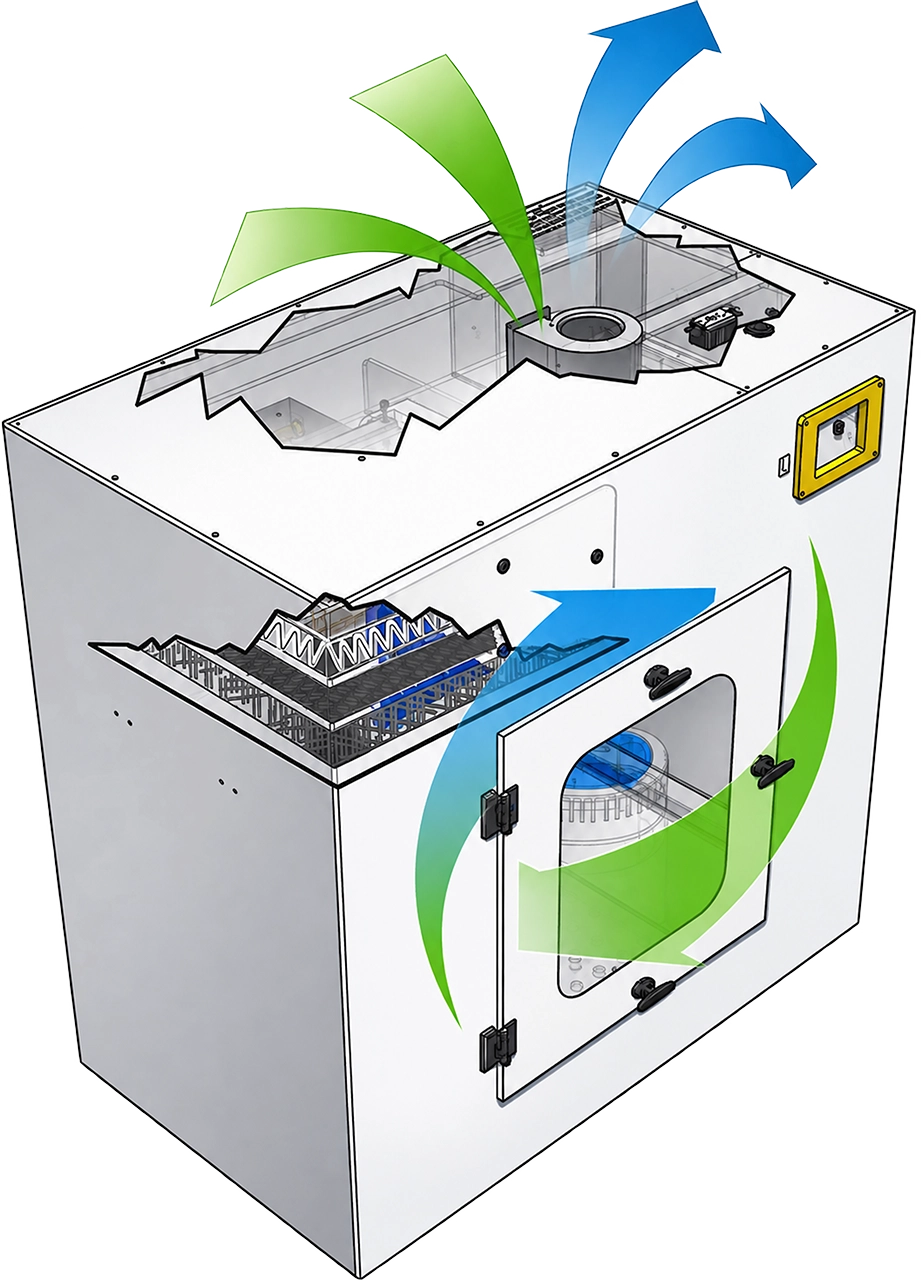
The Dynamic Filtration Chamber maintains a partial vacuum to help prevent vapor leakage. Multiplex™ activated-carbon filtration captures cyanoacrylate fumes during purge, allowing filtered air to return to the room without external ductwork.
Easy Cleaning & Flexible Configurations
Automatic chamber cleansing helps remove residual vapors between processing cycles. Optional UV decontamination, specialized filtration and benchtop, tall or multi-chamber configurations accommodate a range of forensic laboratory needs.
IMPORTANT
SafeFUME is designed specifically for controlled cyanoacrylate (CA) fuming of evidence for latent print development. It is not a general-purpose chemical fume hood. Follow your laboratory’s approved evidence-processing procedures and safety protocols.
Adjustable hanging rods and shelving support a variety of evidence sizes and configurations.
Dedicated Forensic Processing
Floor-standing designs provide a dedicated workstation for routine latent fingerprint development.
When Should I Choose a Multi-Chamber SafeFUME?
Higher Evidence Volumes
Multiple chambers support laboratories processing larger quantities of evidence.
Independent Processing Chambers
Separate compartments allow different evidence loads to be processed independently.
Efficient Laboratory Workflows
Duplex, triple and quad configurations support multiple processing cycles within a single system.
How Does the SafeFUME Work?
Evidence is secured inside the chamber using adjustable hanging rods or shelves. The automatic system establishes the programmed humidity level before heating ethyl cyanoacrylate to generate vapor for latent fingerprint development. Following the processing cycle, contaminated air is drawn through the Multiplex™ activated-carbon filtration system, where chemical vapors are captured before filtered air is returned to the room.
How Does Multiplex™ Filtration Technology Work?
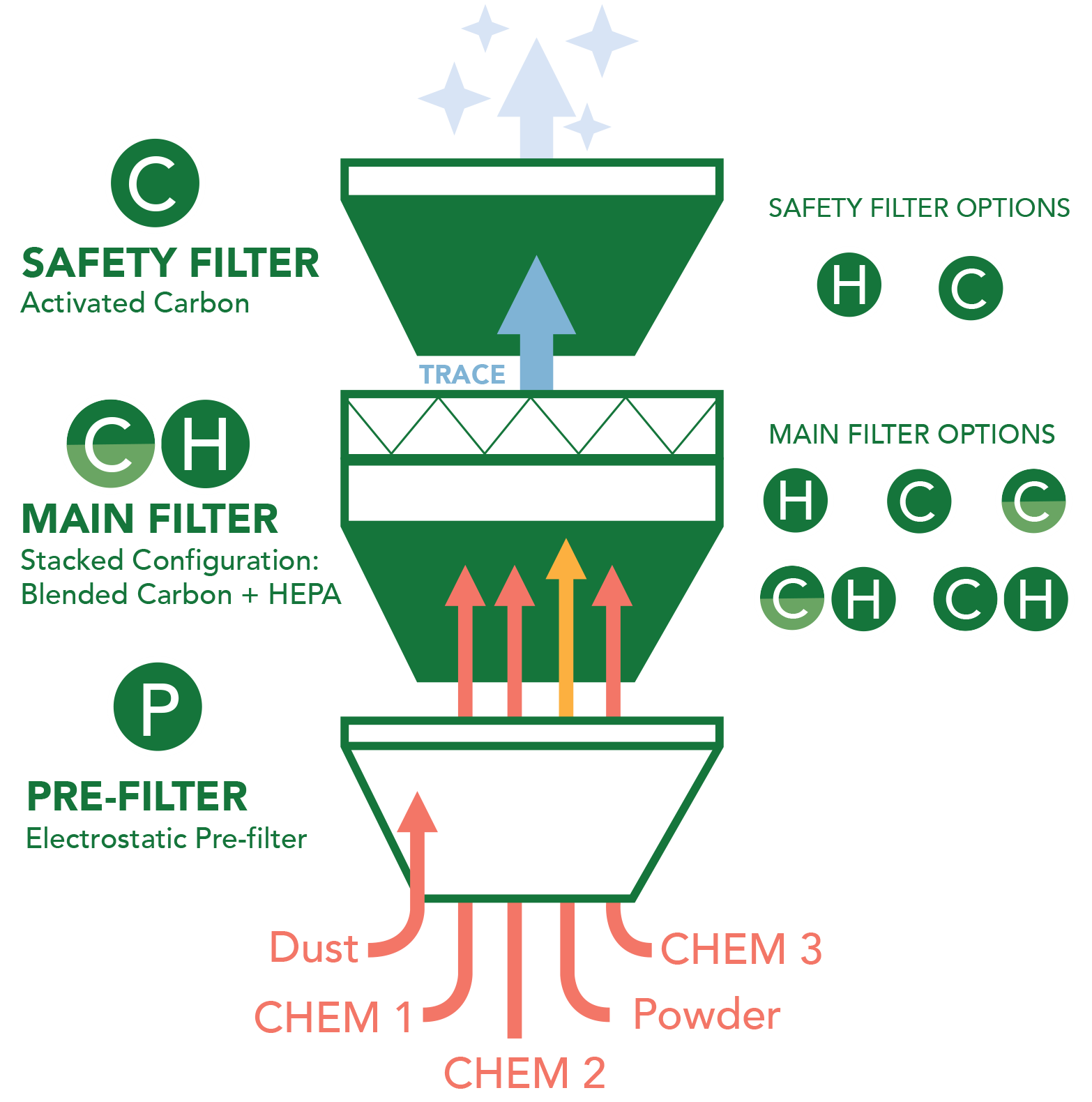
SafeFUME uses the Air Science Multiplex™ Filtration System to capture cyanoacrylate vapors during the purge cycle. An electrostatic pre-filter helps protect the main filtration media, while activated-carbon filters capture chemical vapors before filtered air is returned to the room. Optional HEPA/ULPA filtration is available for applications requiring additional particulate or biological aerosol capture.
SafeFUME can be configured with application-specific Multiplex™ filtration to meet laboratory needs. Activated-carbon filters capture cyanoacrylate and compatible chemical vapors, while optional HEPA/ULPA filtration captures fine particulates and biological aerosols. Filter selection depends on the chemicals and operating conditions of the application.
The most widely used filter in the range, primarily for solvent, organic and alcohol removal.
HEPA/UPLA
Powders and particulates.
Latent Fingerprint Development Applications
SafeFUME Automatic Cyanoacrylate Fuming Chambers provide controlled, repeatable latent fingerprint development on suitable forensic evidence. With programmable humidity, automated fuming cycles, Multiplex™ filtration and secure processing compartments, they support evidence-processing workflows in crime laboratories, law-enforcement facilities and other forensic environments.
Latent fingerprint development on forensic evidence
Cyanoacrylate fuming of nonporous surfaces
Controlled humidity for fingerprint development
Crime laboratory evidence processing
Law-enforcement fingerprint examination
Medical examiner and coroner applications
Automated cyanoacrylate fuming cycles
Multi-case processing in separate chambers
Controlled chemical vapor containment
Secure evidence handling during processing
Repeatable Processing with Printbuster™ Pro
The Printbuster™ Pro control system automates latent fingerprint development with intuitive controls for setting and monitoring processing conditions. Features include programmable humidity, temperature display, door status and lock alarms, circulation fan and hot-plate controls, adjustable processing and purge times, emergency stop functionality and filter-life tracking. These integrated controls help ensure consistent, repeatable processing while reducing manual intervention.
How the Automatic Fuming Cycle Works
1. Load & Secure Evidence
Evidence is positioned inside the chamber using the shelf and adjustable hanging system, and the keyed door is closed.
2. Establish Humidity
The programmable cool-mist nebulizer/humidifier establishes the selected relative-humidity condition.
3. Generate Cyanoacrylate Vapor
The hot plate heats ethyl cyanoacrylate for the programmed interval.
4. Controlled Development
The circulation system manages the chamber environment during the programmed processing time.
5. Filtered Purge
At the end of processing, chamber fumes are drawn through the Multiplex™ activated-carbon filtration system before filtered air is returned to the room.
Frequently Asked Questions
Below are answers to our frequently asked questions and links to additional helpful information.
What is cyanoacrylate fuming?
Cyanoacrylate fuming is a forensic latent-print development process that exposes suitable evidence to cyanoacrylate vapor under controlled conditions. SafeFUME provides a dedicated enclosure for managing humidity, vapor generation, processing time and purge.
How does SafeFUME work?
Evidence is secured in the chamber, the selected relative humidity is established, ethyl cyanoacrylate is heated to generate vapor, the evidence is processed for the programmed period, and the chamber is then purged through activated-carbon filtration before access.
Why is humidity important during cyanoacrylate fuming?
The SafeFUME process treats moisture as a critical processing variable and allows the operator to establish a relative-humidity setpoint using the integrated nebulizer/humidifier.
How long does a SafeFUME cycle take?
There is no single required cycle time in the product literature. Processing and purge times are programmable so the laboratory can use its approved method for the evidence and fuming technique being performed.
What happens during the purge cycle?
Chamber fumes are removed through the Multiplex™ filtration system using activated carbon, and filtered air is returned to the room.
Can I open the chamber immediately after the fuming portion of the cycle?
The operator should allow the programmed purge cycle to complete and follow the laboratory’s approved procedure before opening the chamber.
Does SafeFUME require external exhaust or ductwork?
No. Standard SafeFUME operation is ductless and self-contained; the brochure states that no connection to an outside exhaust system is required.
How are cyanoacrylate fumes filtered?
SafeFUME uses the Multiplex™ filtration system with activated-carbon media selected for the chemical application. The purge cycle draws contaminated air through the filter before returning filtered air to the room.
Does SafeFUME operate under negative pressure?
The Dynamic Filtration Chamber maintains a partial vacuum in the filter plenum. This design is intended to help prevent leakage of contaminated air from the filtration section.
What is the purpose of the pre-filter?
The electrostatic pre-filter helps protect the main filter from aerosols, mists, dust and particulates and can be replaced without tools.
Can HEPA or ULPA filtration be added?
Yes. Optional HEPA or ULPA filtration can be incorporated when fine particulate or biological-aerosol capture is required. These filters do not replace activated carbon for chemical-vapor capture.
What sizes are available?
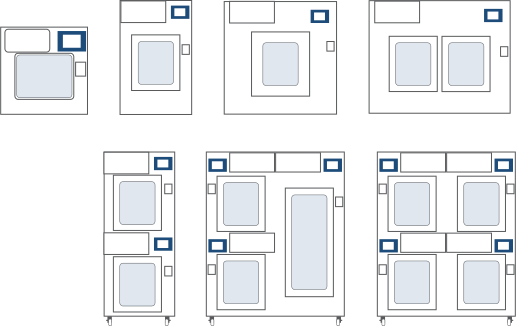
The current SafeFUME family includes benchtop/standard, tall and multi-chamber configurations, with nominal widths ranging from compact 24-inch models through 60-inch models plus Duplex, Tri and Quad systems.
What is the difference between S and T models?
S models are the standard/benchtop-height configurations listed in the current brochure. T models provide substantially greater internal height for larger or taller evidence.
Why would I choose a Duplex, Tri or Quad model?
Multi-chamber configurations provide two, three or four separate fuming compartments within one system, allowing facilities with higher evidence volumes to process separate loads.
Is UV required?
No. UV is an optional accessory. Where used, it should be incorporated into the facility’s approved decontamination procedure and operated with the required safety precautions.
Not Sure Which Product or Filter You Need?
Air Science can review your application, chemicals, concentrations, quantities, and process requirements to help determine an appropriate ductless fume hood and filtration configuration.