Keeping Laminar Flow Hoods Contamination Free
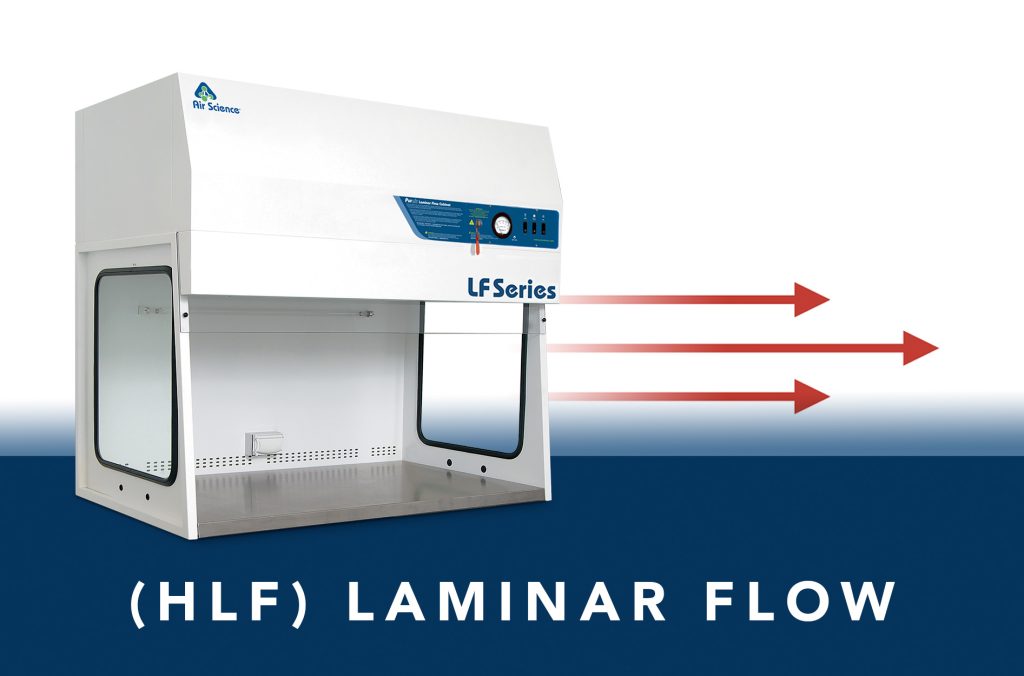
Laminar Flow Hoods come in Vertical Laminar Flow (VLF) cabinets and Horizontal Laminar Flow (HLF)
Air Science® laminar flow cabinets create a clean work environment designed to help protect products, samples, equipment and processes from airborne particulate contamination.
Available in vertical and horizontal airflow configurations, Air Science laminar flow cabinets use high-efficiency particulate filtration to provide clean, unidirectional airflow across the work zone. They are designed for laboratory, pharmaceutical, medical device, electronics, research and other contamination-sensitive applications where product protection is required.
Laminar flow cabinets are designed primarily for product and process protection, not personnel protection. Standard laminar flow cabinets should not be used as chemical fume hoods or for applications requiring containment of hazardous vapors or biohazardous materials. If operator, product and environmental protection are required, a biological safety cabinet or another appropriate containment device may be required.
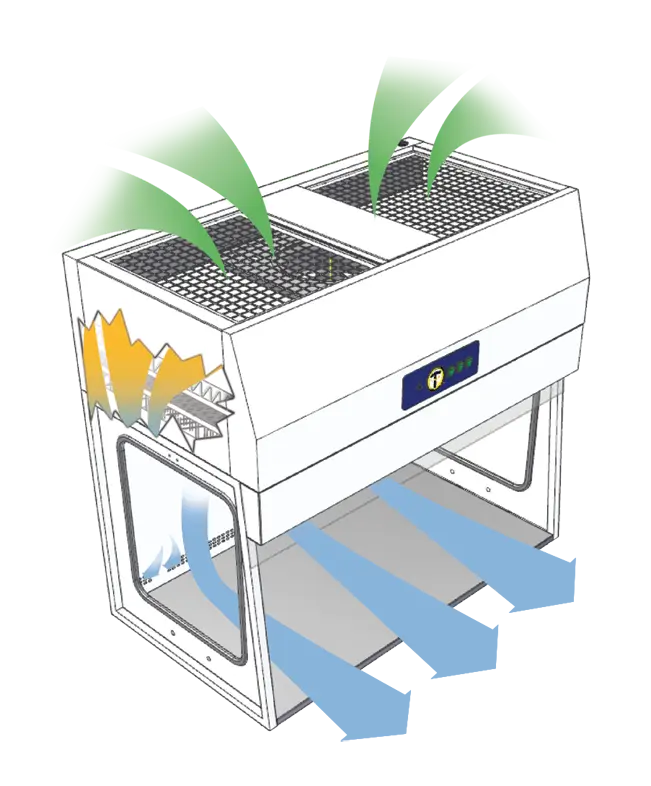
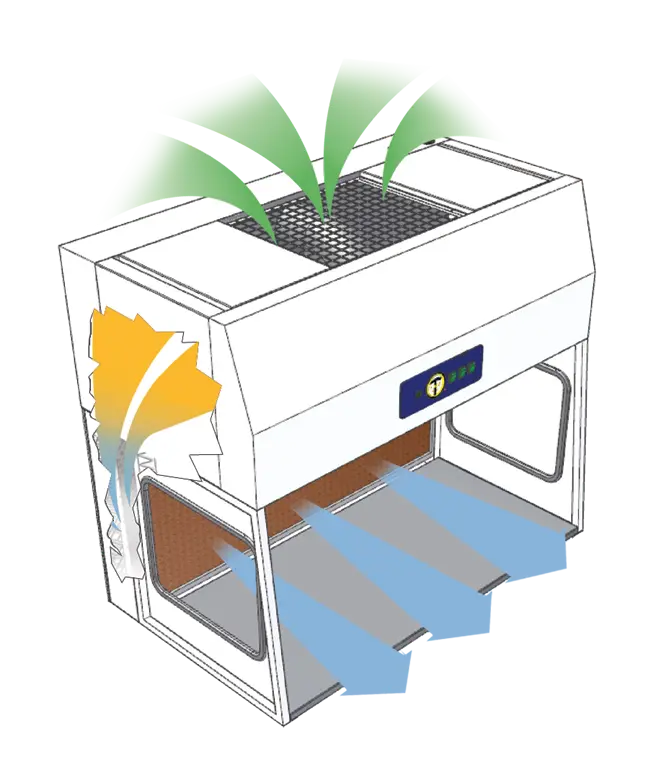
A laminar flow cabinet, also called a laminar flow hood or clean bench, uses high-efficiency filtration to supply clean, unidirectional air across the work area.
Depending on the cabinet design, filtered air moves vertically downward or horizontally across the work surface, helping reduce airborne particulate contamination and protect contamination-sensitive products, samples and processes.
Because the filter is above the work zone, vertical flow provides a taller and deeper usable workspace and can be particularly useful for larger or taller equipment.
Larger equipment is less likely to block the main filter face and interrupt the clean-air stream in a vertical configuration.
Vertical flow provides a taller and deeper usable workspace, allowing more room for equipment within the cabinet.
Vertical cabinets are more easily customized for specific applications.
Clean air travels from the rear of the work zone horizontally across the work surface toward the open front.
Because airflow moves parallel to the work surface rather than directly striking it, horizontal flow creates less work-surface turbulence.
Horizontal flow can be a good choice when a smooth airflow path across an open work surface is preferred.
Horizontal flow is well suited to equipment layouts that do not significantly obstruct the rear-mounted filter or clean-air path.
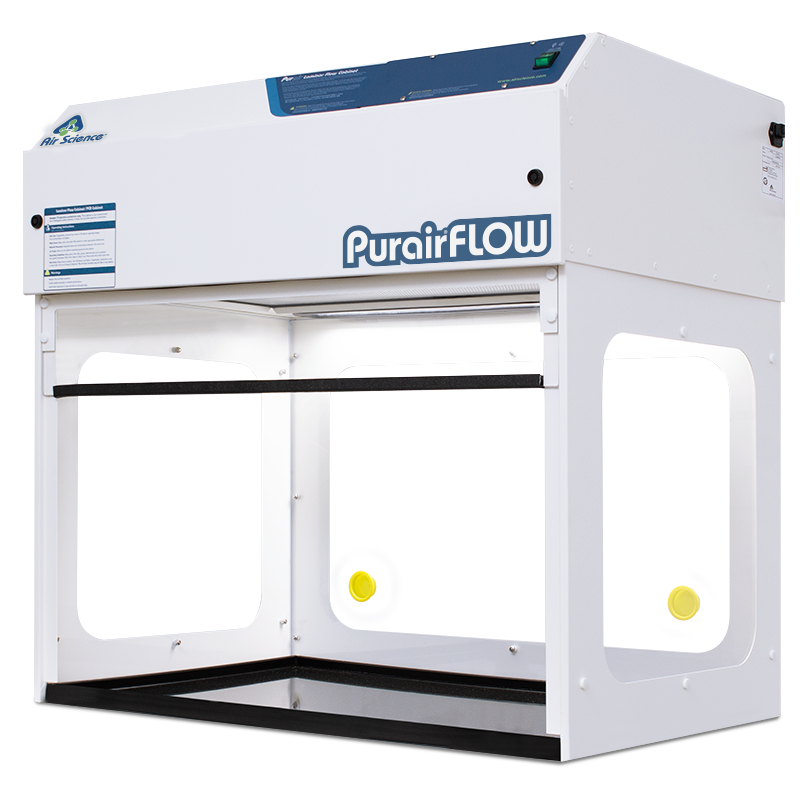
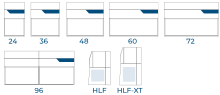
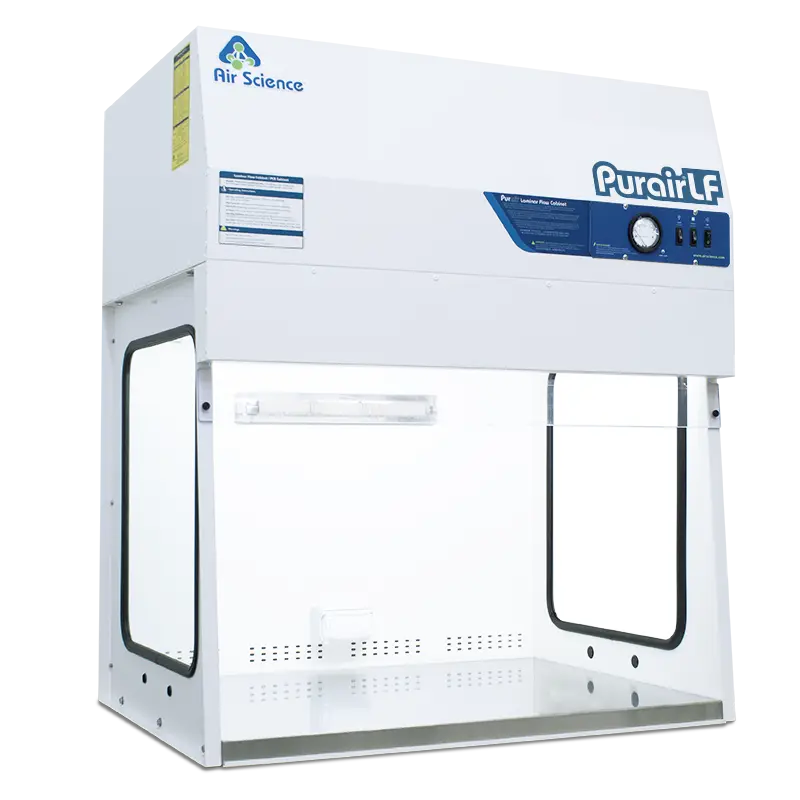
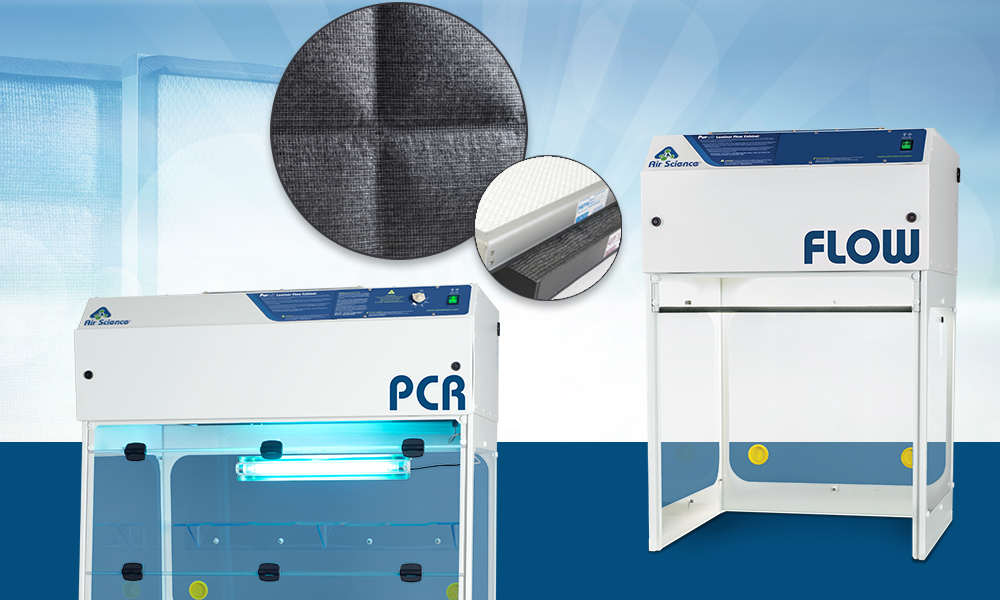
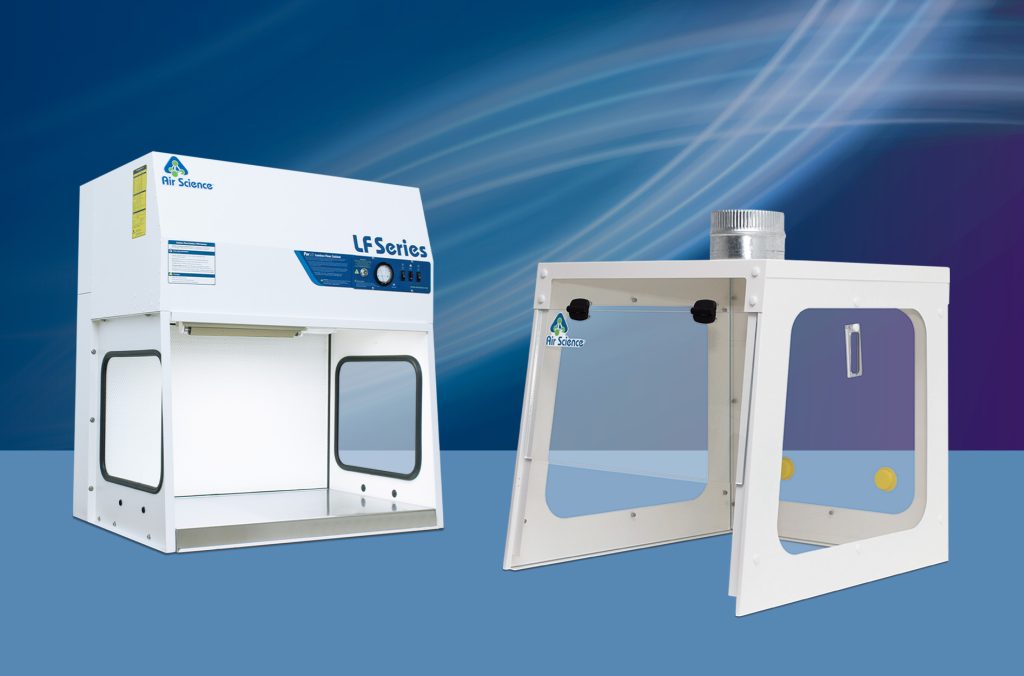
Compact vertical laminar flow cabinet designed for clean airflow, space efficiency and value in general clean-work applications.
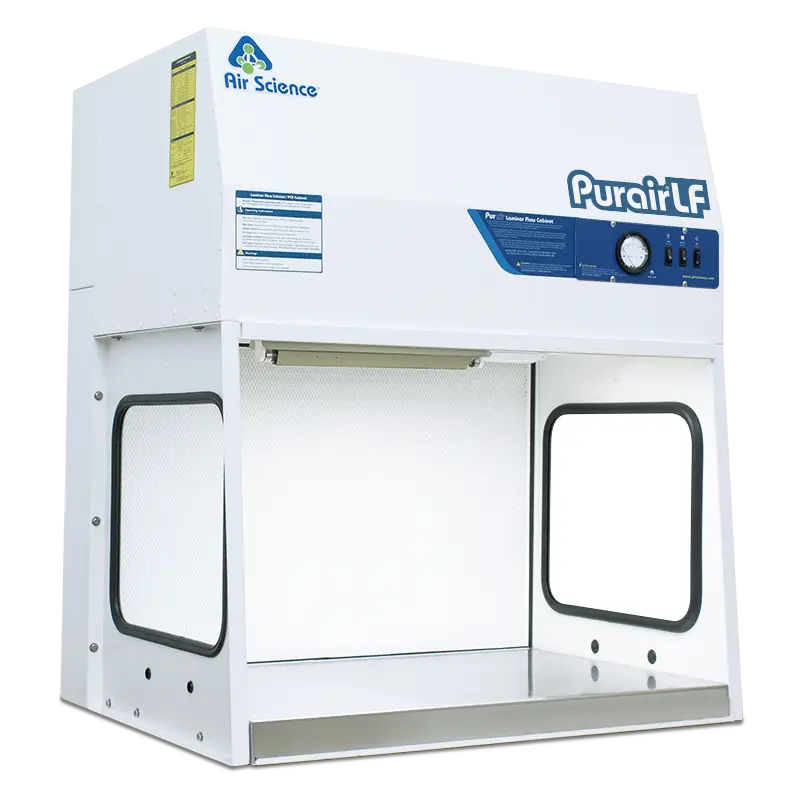
Horizontal laminar flow cabinet with ULPA filtration that provides a smooth clean-air path across the work surface.
Vertical laminar flow cabinet with ULPA filtration, multiple sizes and configurations for high-performance clean-work applications.
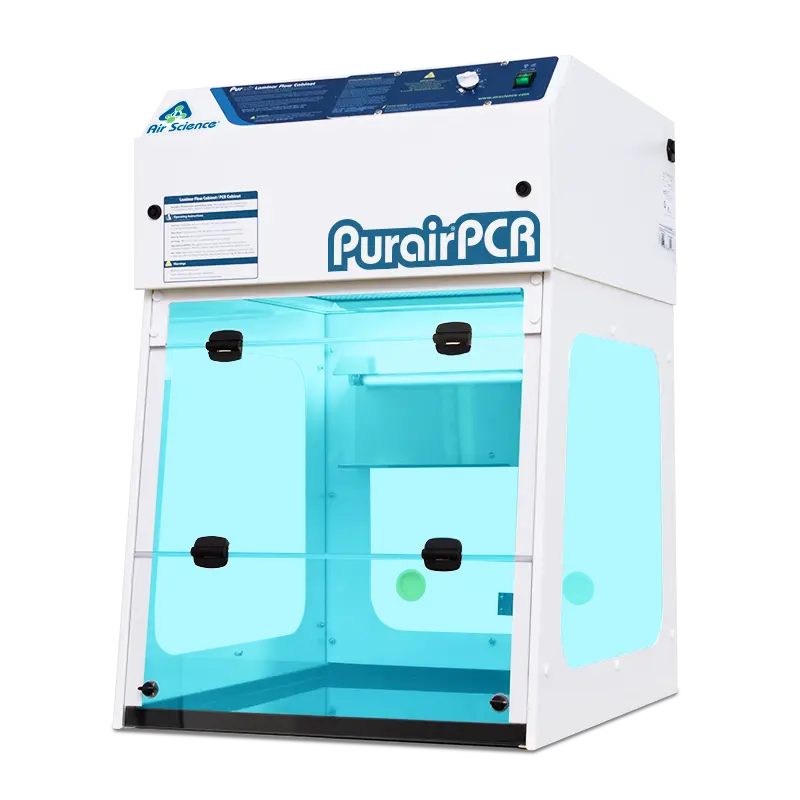
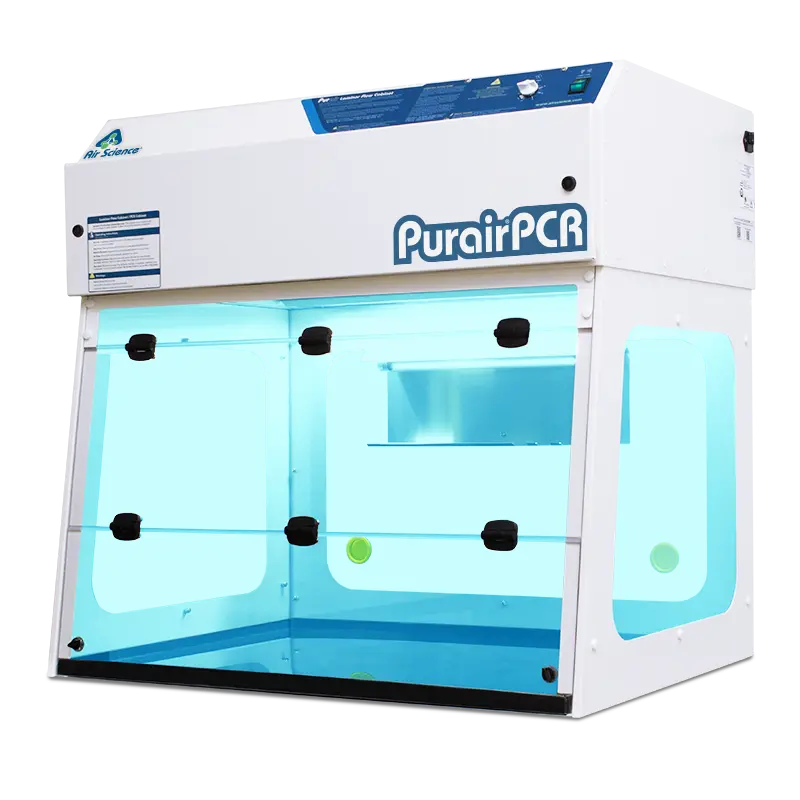
Vertical laminar flow workstation with HEPA filtration and built-in UV decontamination features for PCR and contamination-sensitive sample preparation.
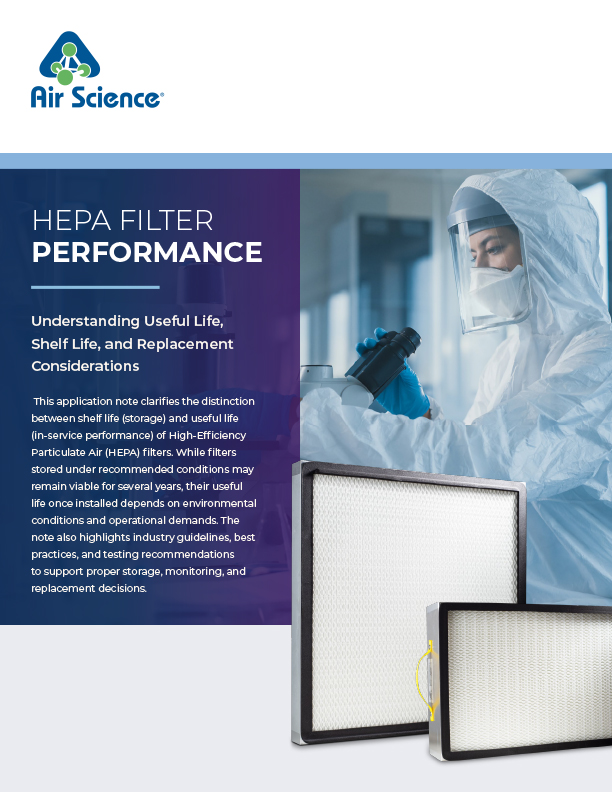
Air Science laminar flow cabinets use HEPA or ULPA filtration to remove airborne particles from the clean-air work zone. HEPA filtration is widely used for clean-work applications, while ULPA provides a higher level of particulate filtration and is standard in the Purair® LF Series.
Purair® LF Series cabinets use ULPA filtration that is 99.999% efficient at particle sizes between 0.1 and 0.3 µm and provide clean-air performance that meets and exceeds ISO Class 4. The appropriate filtration depends on the cabinet and cleanliness requirements of the application.
A standard laminar flow cabinet supplies clean, filtered air to protect the work. Laminar flow is not the same as containment, and these cabinets should not be selected simply because an application needs a “hood.” Chemical fume hoods and biological safety cabinets are designed for different hazards and protection requirements.

Laminar Flow Hoods come in Vertical Laminar Flow (VLF) cabinets and Horizontal Laminar Flow (HLF)

Horizontal laminar flow hoods provide air streams that travel in the same direction (horizontally) and
The Difference Between Fume Hoods and Laminar Flow Hoods Both ducted fume hoods and laminar

The Role of Laminar Flow Hoods in Contamination Control Particulate contamination is a constant and

Below are answers to our frequently asked questions and links to additional helpful information.
A laminar flow cabinet provides clean, filtered, unidirectional airflow across a work area to help protect products, samples and processes from airborne particulate contamination.
These terms are often used interchangeably. Customers may refer to the equipment as a laminar flow cabinet, laminar flow hood or clean bench. The important consideration is the airflow configuration, filtration and protection required for the application.
No. A standard laminar flow cabinet is designed primarily for product or process protection. It is not designed to provide personnel protection from hazardous chemicals, vapors or biohazardous materials.
A laminar flow cabinet primarily provides product protection by supplying clean, filtered air across the work zone. A biological safety cabinet is designed for biological containment and, depending on its class and configuration, can provide personnel, product and environmental protection.
The best configuration depends on the application, equipment being placed inside the cabinet, work-zone dimensions, workflow and available space. Air Science can help review the application before final selection.
Purair® FLOW is Air Science’s compact, economical vertical laminar flow platform and uses HEPA filtration as standard. Purair® LF is the premium platform, available in both vertical and horizontal airflow configurations and in a wider range of sizes. LF Series cabinets use ULPA filtration and include additional standard features.
The right size depends on the equipment and materials being placed inside the cabinet, the number of people using it, workflow and available laboratory space. Consider the size and height of equipment in the work zone and allow sufficient space so materials do not unnecessarily block or disrupt clean airflow.
HEPA and ULPA are both high-efficiency particulate filters. ULPA filtration provides a higher particulate filtration efficiency than HEPA filtration. The required filter depends on the selected cabinet and the cleanliness requirements of the application.
Filter life varies depending on the cabinet, filter size, frequency of use, surrounding environment, location and particulate loading. On smaller clean benches with smaller filters, HEPA or ULPA filters may require replacement approximately every 12–14 months. On larger cabinets, such as the Purair® LF Series, the main filter may last 3–5 years under typical operating conditions. These are general guidelines rather than fixed replacement intervals. Filter condition and cabinet performance should be monitored, and filters should be replaced when they can no longer maintain the required airflow or filtration performance.
Filter replacement should be based on cabinet performance, airflow and filter loading rather than appearance alone. Follow the maintenance and monitoring procedures for the selected model and replace filters when they can no longer maintain the required performance.
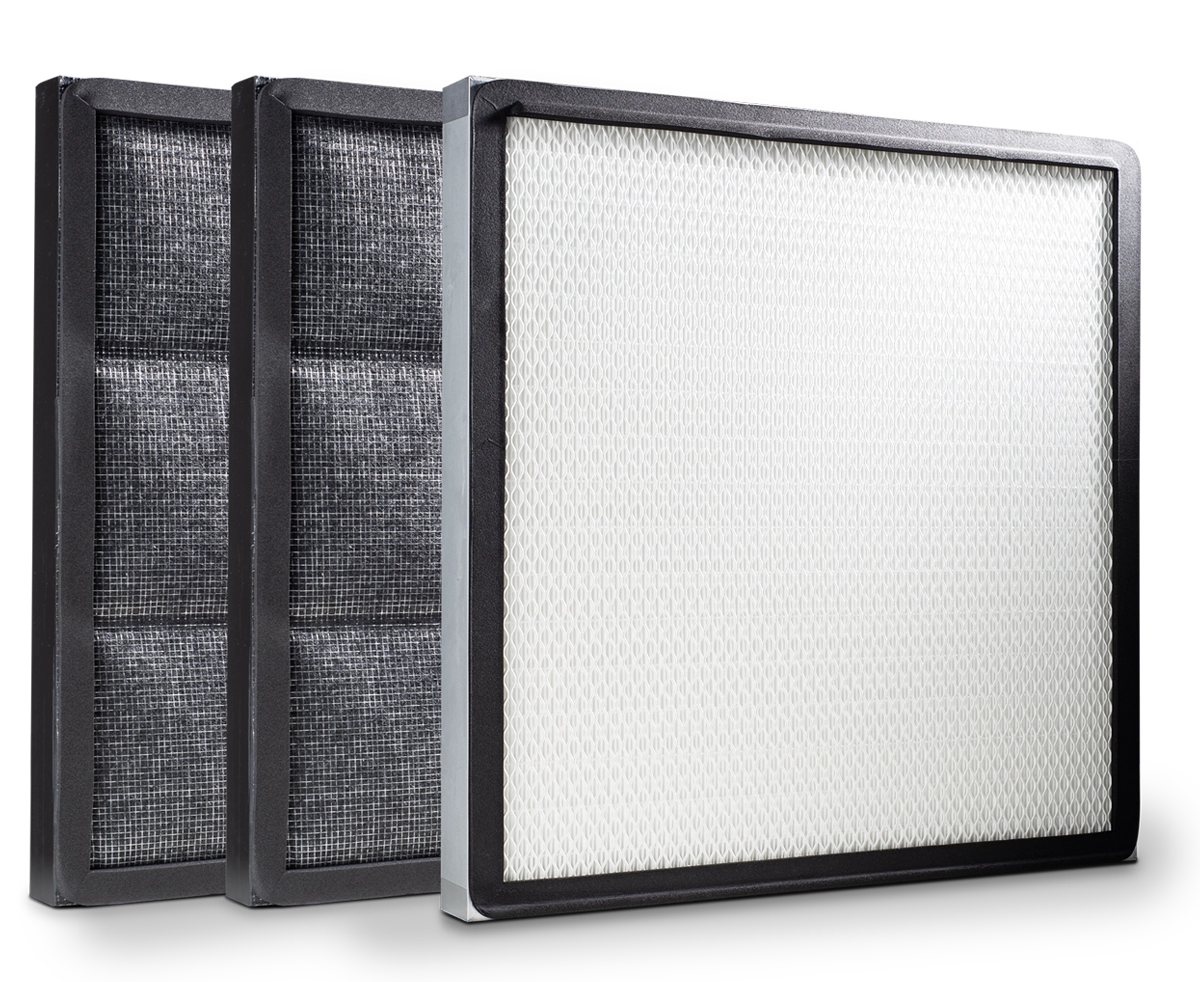
Pre-filters are the first stage of filtration and help protect the main HEPA, ULPA or activated carbon filters by capturing larger, gross-size airborne particulates before they reach the primary filter. This reduces particulate loading on the main filter and can help extend its useful service life. As a general guideline, pre-filters should be checked and typically replaced every 2–3 months, depending on use and the surrounding environment.
A standard laminar flow cabinet should not be used as a chemical fume hood or for applications requiring containment of hazardous vapors. Laminar flow cabinets are designed primarily for product or process protection, not personnel protection.
A standard laminar flow cabinet should not be used for applications requiring containment of biohazardous materials. If operator, product and environmental protection are required, a biological safety cabinet or another appropriate containment device may be required.
Laminar flow cabinets are intended for indoor use. For best performance, locate the cabinet away from high-traffic areas, doors, strong room-air currents and HVAC supply vents that can disturb the airflow around the open front of the cabinet. The final location should also provide adequate space for normal operation, service and filter access.
The terms clean bench and laminar flow cabinet are often used interchangeably. Both generally describe equipment that supplies clean, filtered, unidirectional air across a work area to help protect samples, products and processes from airborne contamination. A PCR workstation is a specialized type of clean-air workstation designed specifically for PCR and other contamination-sensitive sample preparation. The Air Science Purair® PCR uses vertical HEPA-filtered laminar airflow, similar to a vertical clean bench, but adds features intended to help reduce cross-contamination between PCR procedures, including a built-in UV lamp with timer and a UV-absorbing front sash with safety interlock.
UV lamp output and effectiveness decrease with operating time, even when the lamp continues to produce visible light. As a general maintenance guideline, Air Science recommends replacing UV lamps approximately every 12 months, typically at the same time as other routine cabinet maintenance. Actual service life can vary depending on the lamp, frequency of use and operating conditions.
Air Science can review your application, equipment, work-zone requirements, airflow direction and filtration needs to help determine the appropriate laminar flow cabinet for your application.
Work directly with our team to configure the right solution for your application and performance requirements.
Browse select Air Science products and accessories available for online purchase.
Need a custom solution? Our team is ready to help.
Order replacement HEPA and ULPA filters for Air Science laminar flow cabinets and clean benches.