
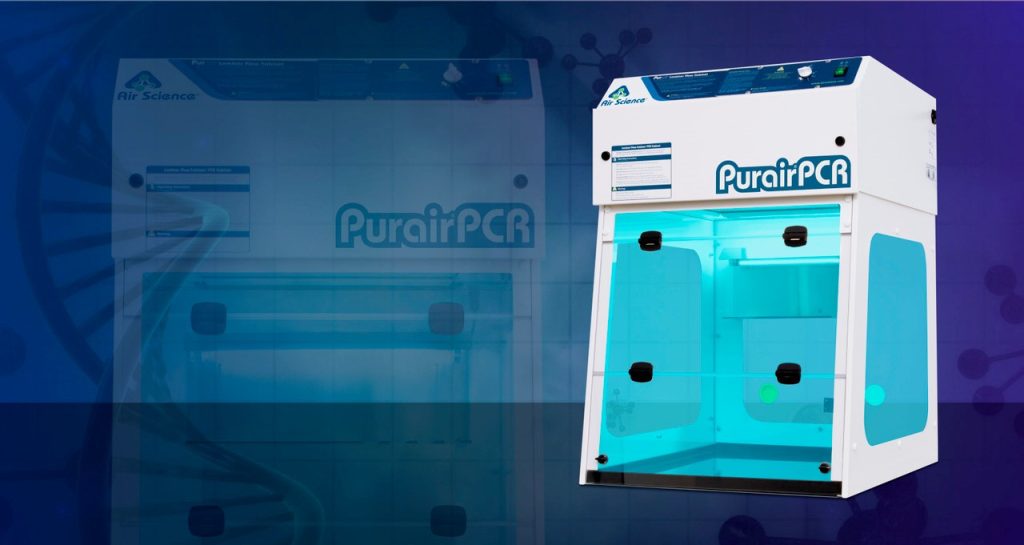
In the modern laboratory, precision is the benchmark of success. Whether you are identifying a viral pathogen, sequencing a new genome, or processing critical evidence from a crime scene, the integrity of your results hinges on one factor: contamination control.
Polymerase Chain Reaction (PCR) amplification has revolutionized these fields, but its extreme sensitivity makes it vulnerable to even trace amounts of foreign DNA or other contaminants.
This is where the PCR cabinet, also known as a PCR workstation, becomes the unsung hero of the lab.
The Critical Role of PCR Workstations
PCR cabinets are vertical laminar flow enclosures specifically engineered to create a sterile environment for PCR amplification. Unlike standard laboratory benches, these workstations use HEPA/ULPA filtration to provide a constant flow of purified air over the work surface.
- Particulate Protection: HEPA filters, with 99.97% efficiency for 0.3-micron particles, capture airborne contaminants that could lead to false positives or skewed data.
- Active Decontamination: Equipped with germicidal UV lamps, these cabinets reduce DNA and RNA fragments between cycles, ensuring that carry-over contamination from previous sessions does not compromise new samples.
- Dead Air vs. Laminar Flow: While dead air boxes offer a still-air environment, they cannot actively protect against particulates introduced during the work process. True PCR laminar flow hoods provide unidirectional, filtered air that captures contaminants in real-time.
Impact Across Essential Industries
1. Disease Diagnosis and Clinical Labs
In clinical settings, PCR is the gold standard for detecting infectious diseases. PCR cabinets provide a controlled, high-efficiency barrier designed to protect patient samples from airborne particulates and cross-contamination from the ambient environment. By significantly reducing the risk of external contaminants, these workstations help lab technicians maintain the high level of accuracy required for fast diagnoses and effective treatment plans.
2. Genetic Research and Genomics
Genetic research often involves the amplification of very small or degraded DNA samples. In these high-stakes applications, any cross-contamination can lead to false positives. PCR workstations provide the sterile work zone necessary for aseptic techniques, protecting the high-level research that drives medical breakthroughs.
3. Forensic Analysis
In forensic science, the chain of custody and the purity of evidence are paramount. Forensic investigators rely on PCR to develop DNA profiles from minute samples found at crime scenes. Using a dedicated PCR workstation mitigates the risk of foreign DNA entering the evidence stream, supporting the integrity of the investigation.
The Air Science Advantage
Maintaining a safe, energy-efficient, and contamination-free environment is at the heart of our design philosophy. The Air Science Purair® PCR Workstation is built to provide flexible access to thermocyclers while maintaining a secure barrier against the outside environment.
By integrating ergonomic design with advanced HEPA filtration and UV sterilization, we help laboratories achieve more accurate, reproducible results — no matter how sensitive the application.
Looking to upgrade your lab’s contamination control?
Explore our full line of PCR Laminar Flow Cabinets or shop for select models online for your next upgrade.