Ductless vs Ducted – the Best of Both Worlds
For any lab that generates volatile vapors or hazardous fumes, fume hoods are an essential
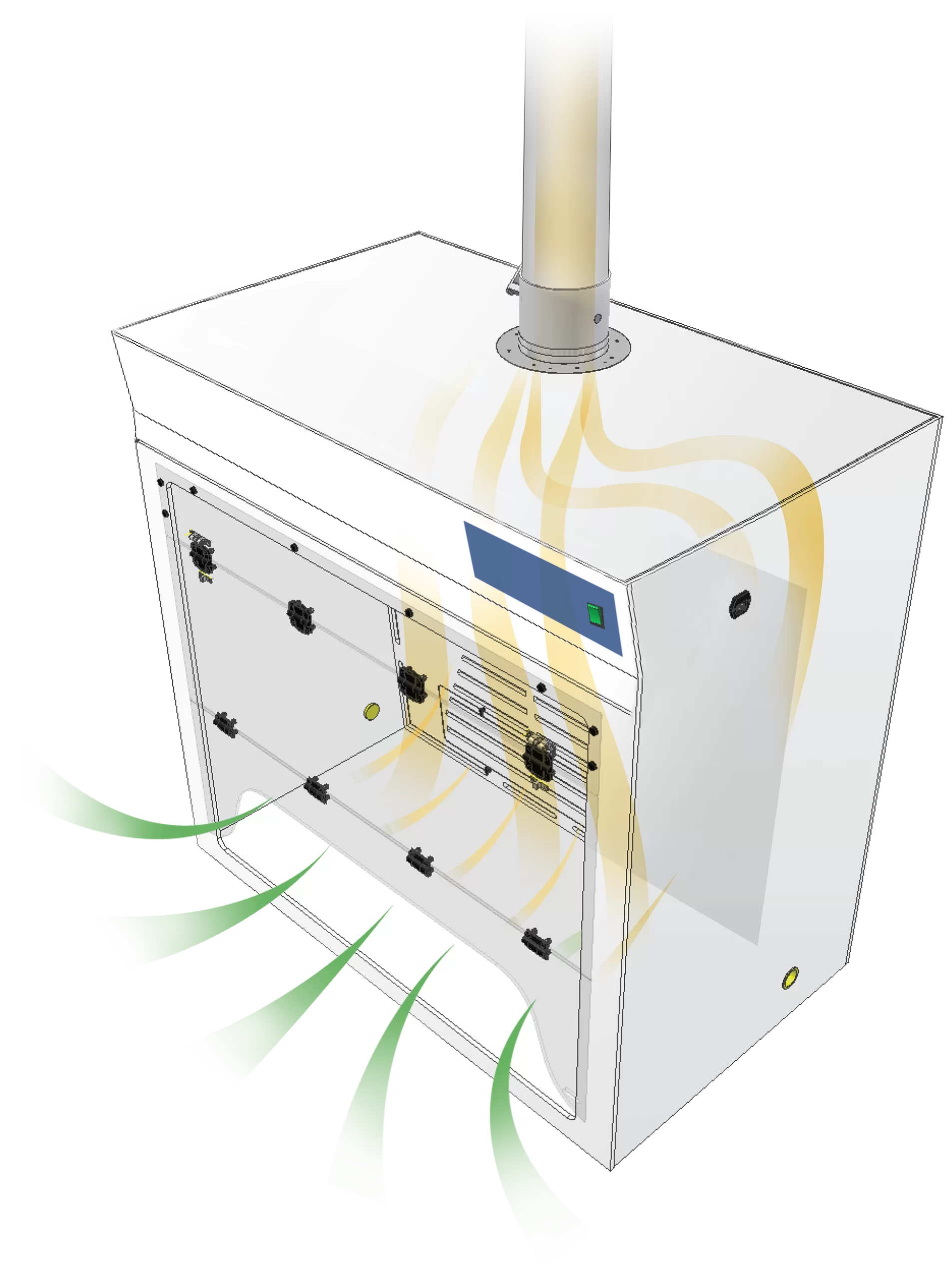
Air Science® ducted fume hoods provide personnel protection by drawing laboratory air into a negative-pressure work zone and exhausting contaminated air through the facility’s ductwork.
Available in a range of configurations, our ducted fume hoods support applications involving hazardous fumes, vapors, gases and particulates. From compact laboratory work to high-clearance equipment and traditional sliding-sash installations, each solution is designed to meet specific laboratory and facility requirements.
Room air enters through the hood opening and moves across the work surface, creating a negative-pressure work zone. Contaminated air is drawn into the hood’s exhaust path and carried through facility ductwork for discharge outside the building.
The facility exhaust system maintains the required airflow. Exhaust fan selection, duct resistance, sash position and make-up air can all affect containment performance.
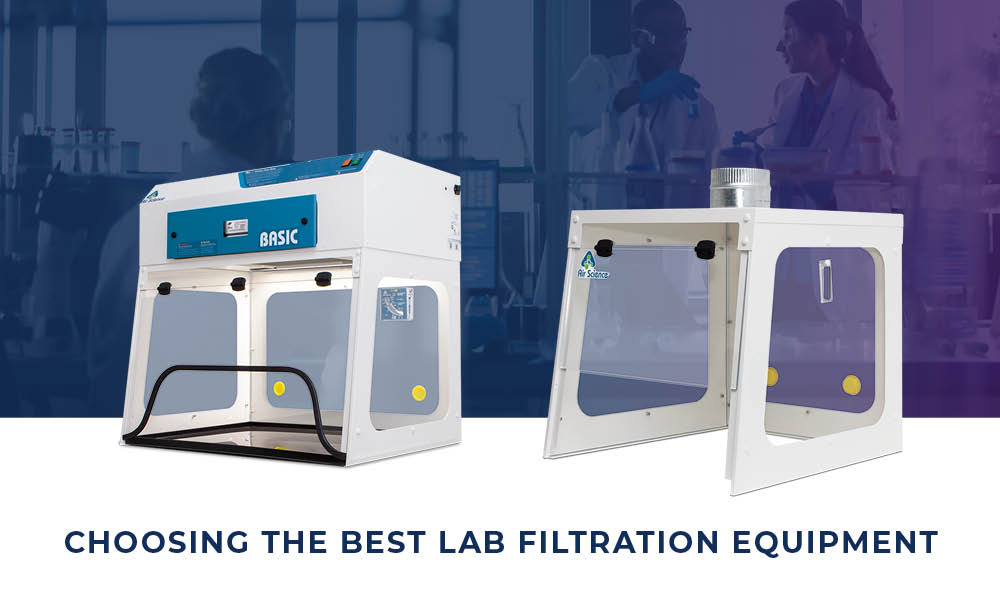
A ductless fume hood can be a good choice for applications involving known chemicals that can be effectively captured by the selected filter media.
Ductless fume hoods can be appropriate for processes that generate relatively controlled quantities of hazardous vapors.
A ductless system can be a good option for laboratories where installing external ductwork is difficult or expensive.
Ductless fume hoods can provide greater flexibility for facilities that may need to relocate equipment. Because filtered air is recirculated back into the laboratory rather than exhausted outdoors, they can also reduce the loss of conditioned laboratory air.
A ducted fume hood may be more appropriate for applications involving high chemical volumes.
Ducted systems may be more appropriate for processes involving unknown or frequently changing chemical mixtures.
A ducted fume hood should be considered for processes that cannot be adequately controlled by available filter media.
A ducted solution may be appropriate when direct exhaust to the outdoors is required by the facility’s risk assessment, applicable standards, codes or procedures.
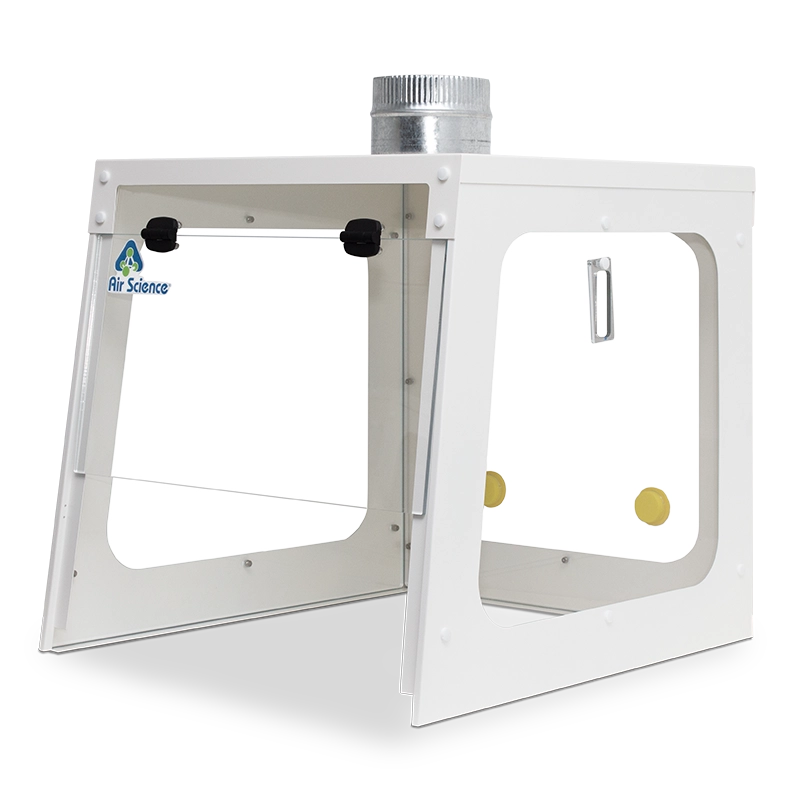
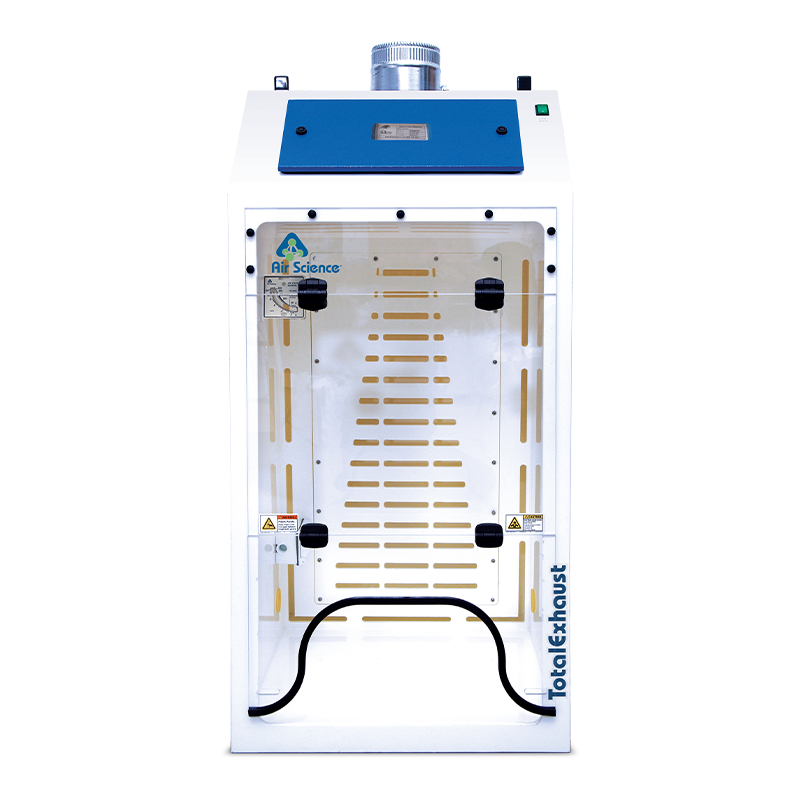
Compact ducted fume hoods designed for chemical handling applications requiring external exhaust, with clear panels for visibility and a space-saving design.
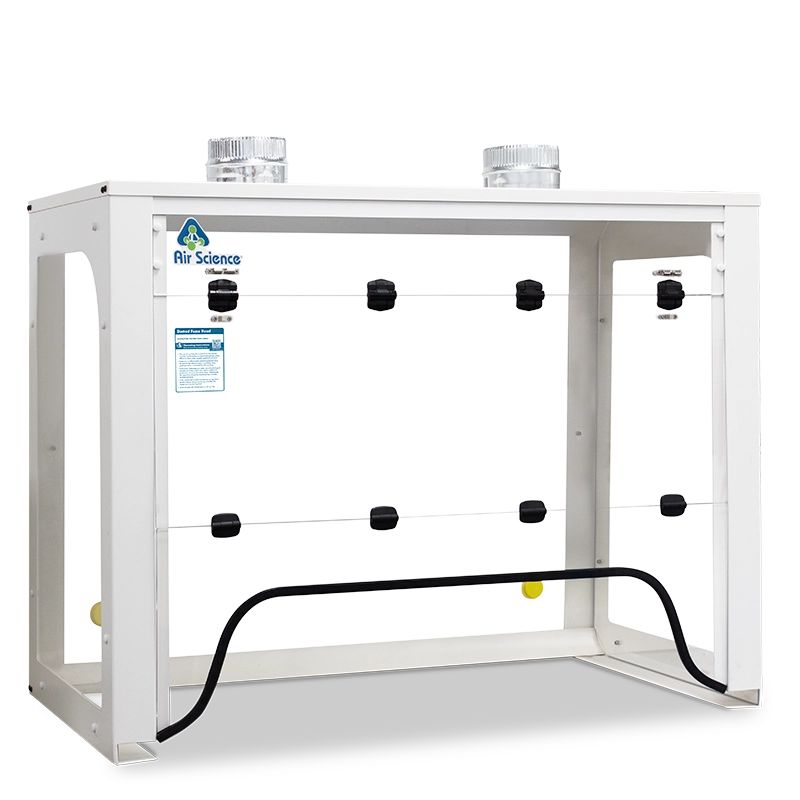
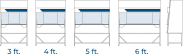
High-clearance ducted fume hoods designed to accommodate taller equipment and larger apparatus while protecting personnel from hazardous fumes and chemicals.
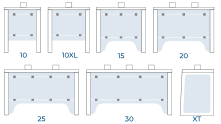
Traditional sliding-sash ducted fume hoods designed for fixed laboratory installations requiring reliable containment and external exhaust.
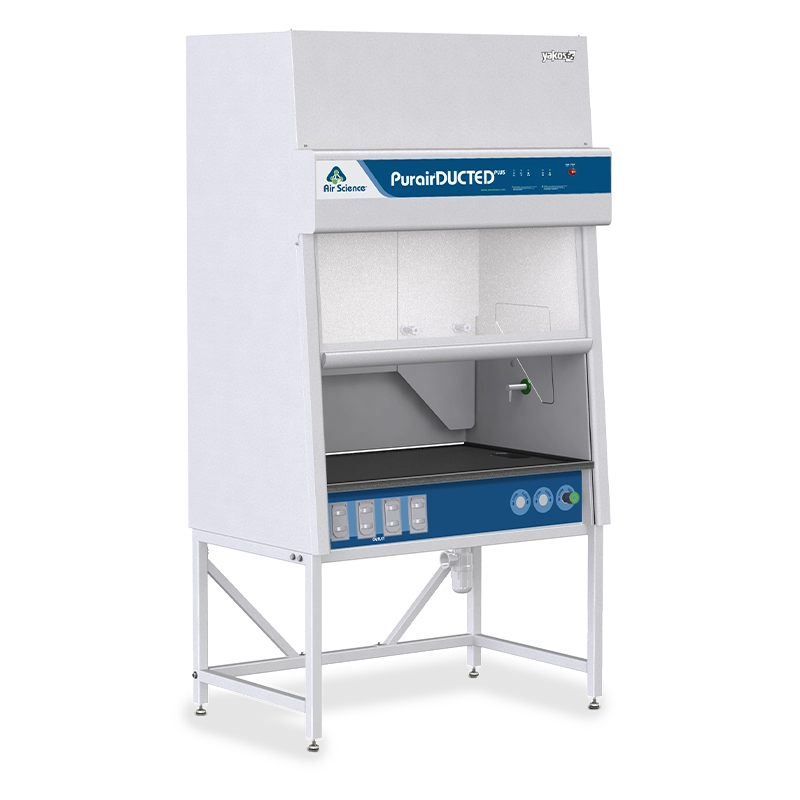
Externally vented fume hoods featuring horizontal and vertical airflow for personnel protection during laboratory processes.
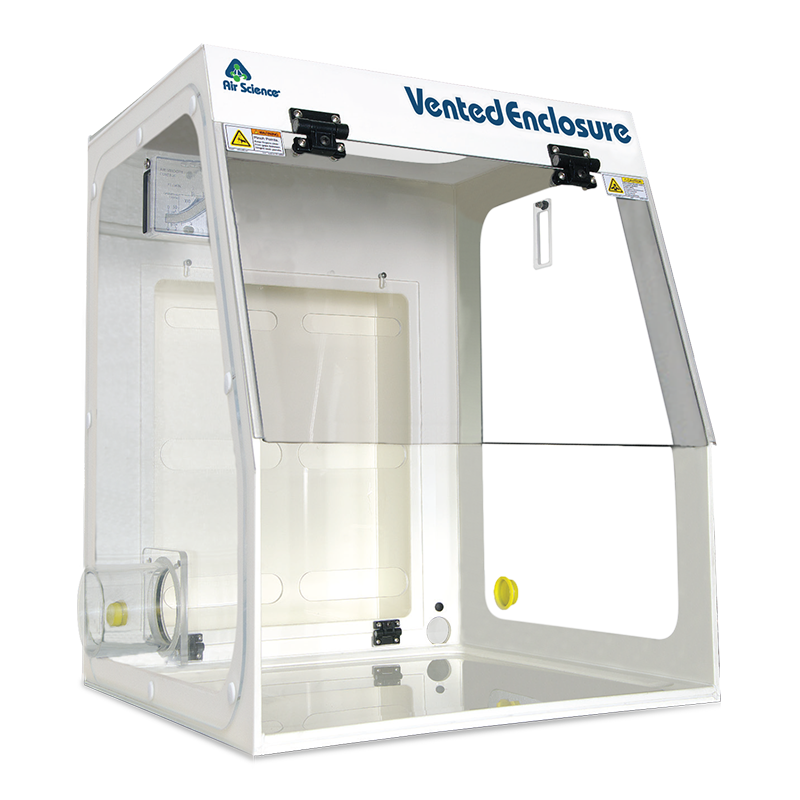
Specialized externally vented enclosures designed for powder weighing, compounding and other applications requiring controlled containment.
A ducted fume hood is one component of a complete laboratory exhaust system. Proper installation requires suitable ductwork, an exhaust fan and appropriate exterior discharge, along with consideration for the conditioned air removed from the laboratory.
Do not select an exhaust fan or size facility ductwork using a generic rule of thumb. Final exhaust requirements depend on the selected hood, duct length and fittings, system resistance, required face velocity and facility design.

For any lab that generates volatile vapors or hazardous fumes, fume hoods are an essential
When outfitting your laboratory with new equipment, it’s always a good idea to carefully consider

The Difference Between Fume Hoods and Laminar Flow Hoods Both ducted fume hoods and laminar

When looking to meet sustainability goals and improve overall energy efficiency, laboratory equipment often comes
Below are answers to our frequently asked questions and links to additional helpful information.
A ducted fume hood is a ventilated laboratory enclosure that draws air into the work zone and exhausts contaminated air outside through a facility duct system. It helps protect personnel from hazardous fumes, vapors, gases and particulates.
Ducted fume hoods exhaust contaminated air outside through facility ductwork. Ductless fume hoods use filtration to capture suitable contaminants before returning filtered air to the laboratory. The right choice depends on the chemicals, quantities, frequency of use and facility requirements.
Ducted fume hoods are often appropriate for higher-volume chemical use, frequent or continuous processes, toxic gases and applications involving chemicals that are not suitable for recirculating filtration.
Not necessarily. Both can provide appropriate protection when properly selected, installed and operated. Safety depends on the chemicals being used, the application and the performance of the complete ventilation system.
Ducted fume hoods generally exhaust contaminated air outside rather than filtering and recirculating it. Any additional filtration or exhaust treatment requirements depend on the application and facility.
Yes. A ducted fume hood must be connected to a suitable facility exhaust system. Ductwork, exhaust fan requirements and exterior discharge must be evaluated for the selected hood and installation.
Face velocity is the speed of air entering the hood opening. It is one factor in containment performance, along with sash position, room airflow, equipment placement and the overall exhaust system.
Make-up air replaces the room air removed by the exhaust system. Adequate make-up air helps maintain laboratory air balance and supports proper fume hood operation.
Relocating a ducted fume hood requires evaluation of the new facility exhaust connection, airflow requirements and installation conditions. The hood should be recommissioned before routine use.
Consider the chemicals and processes involved, equipment dimensions, required work area and facility exhaust capabilities. Air Science can help review your application and identify an appropriate ducted fume hood solution.
Air Science can help you select the right ducted fume hood based on your chemical applications, equipment requirements and facility exhaust capabilities.
Work directly with our team to configure the right solution for your application and performance requirements.
Browse select Air Science products and accessories available for online purchase.
Need a custom solution? Our team is ready to help.
Order replacement HEPA and ULPA filters for Air Science laminar flow cabinets and clean benches.